
 Self-performed crews, never brokered
Rack Bents & Stanchions
Single-tier T-bents through multi-tier braced and moment bents, plus single stanchions for a line that runs off the main rack.
Industrial Steel & Pipe Supports
Structural steel pipe racks, bents, tiers and pipe supports for plants and terminals across Greater Houston. Detailed, fabricated, galvanized and erected by our own crews.
Service Overview
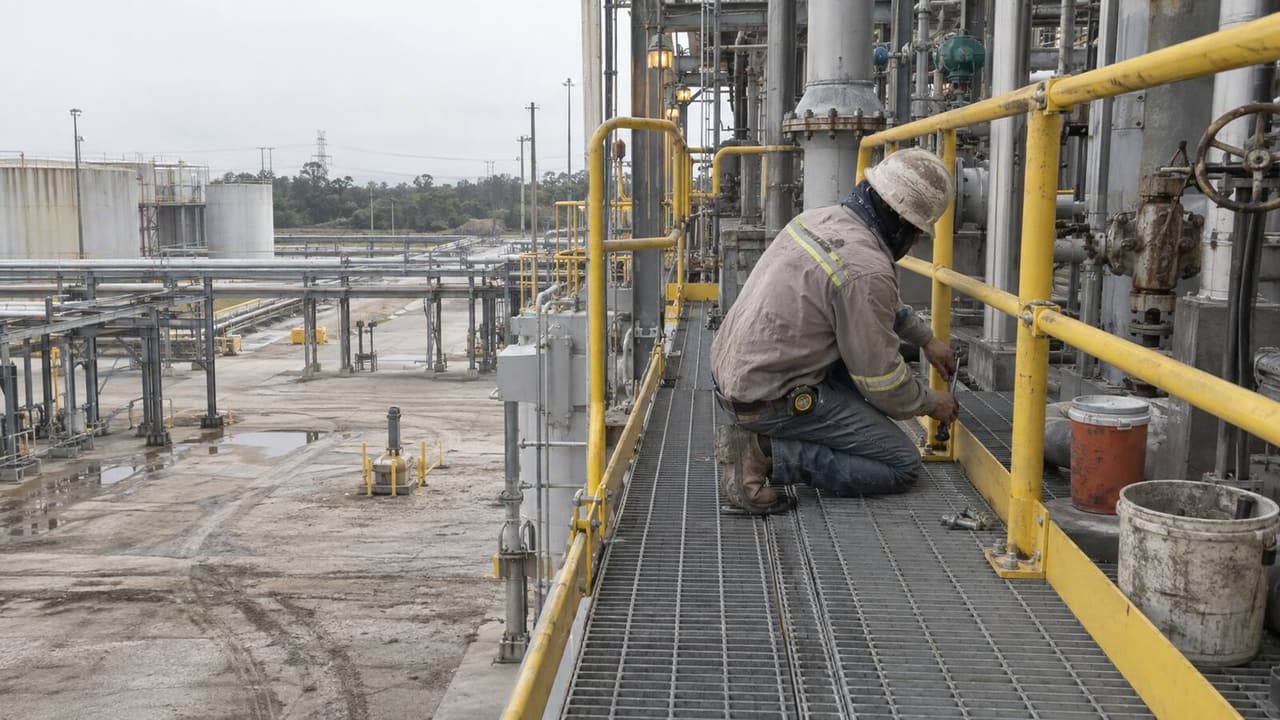
Process piping only goes where the steel carries it. Along the Ship Channel that steel stands outside in salt air, takes hurricane wind, and holds lines that grow and shrink all day. A pipe rack handles all of it: columns and bents, tier beams, longitudinal struts, cable tray levels, and the shoes and guides under every line.
Jimenes Construction is a self-performing steel contractor in Houston, TX with 23 years on this coast. Our own crews detail, fabricate, weld and erect the rack, so one contractor owns it from mill order to final bolt-up.
We build racks for refineries, chemical plants, terminals and industrial general contractors from Pasadena and Deer Park out to Baytown and La Porte. Scope runs from one added bent over an existing line to a full modular rack set inside a turnaround window. Heavier vessel and skid steel sits on our equipment supports page. Access steel is covered under platforms and catwalks.
A rack is only as steady as what it bolts to. Houston clay swells and shrinks, so rack foundations here usually run on drilled piers with concrete pedestals. We set anchor bolt templates while the machine foundation is still in the forms. A base plate that misses by half an inch costs a crane day.
Coverage
Each of these is its own trade. We detail, fabricate and erect all six in house.
Single-tier T-bents through multi-tier braced and moment bents, plus single stanchions for a line that runs off the main rack.
Tier beams, longitudinal struts and bracing set on the spacing the piping plan calls for, with room left for lines the plant adds later.
A dedicated top tier for cable tray and instrument conduit, with drop supports and tray hangers framed into the same steel.
Shoes, guides, line stops, dummy legs and spring support steel fabricated to the stress drawings so each line moves the way it was modeled.
Bents assembled, welded and galvanized in the shop, then trucked in and set complete. Less field time next to a live unit.
Anchor bolt templates set into pedestals and pier caps, then base plates shimmed, leveled and grouted so every column lands plumb.
Our Process
Five steps, the same on one added bent and on a 400-foot rack run. Call (832) 576-3278 to start at step one.
We walk the rack line with your team and read the piping drawings and the stress report. We check crane access, live lines overhead and hot work limits before we price anything.
A quote tied to the sealed drawings: shapes and tonnage, connection type, bolts, field welds, galvanizing or coating, shoes and guides, crane time and permit hours.
Detailed shop drawings go to the engineer for approval. Then we cut, drill and weld to AWS D1.1 with certified welders, file the mill test reports, and send the steel to the galvanizing kettle.
Templates set into the pedestals, then bents craned in and plumbed on leveled base plates. Struts and tier beams draw up on high-strength bolts, and field welds run where the drawings call for them.
Third-party special inspection of welds and bolting, windstorm paperwork where the county requires it, galvanizing touch-up to ASTM A780, then as-builts and sealed letters at closeout.
Timeline
Real ranges from our own job records, from mobilization to turnover.
| Project Type | Typical Size | Duration |
|---|---|---|
| Single bent or added pipe support | 1 - 2 bents | 3 - 7 Days |
| Rack extension or tie-in | 40 - 100 linear ft | 1 - 3 Weeks |
| Multi-tier rack run | 200 - 500 linear ft | 4 - 8 Weeks |
| Modular shop-built rack package | 10 - 40 bents | 6 - 12 Weeks |
| Turnaround support steel replacement | Varies by scope | Planned to the outage window |
Engineering & Compliance
A rack outside a Ship Channel unit takes wind, thermal load and salt air at once. All three show up in the steel and the coating.
Why Jimenes
Rack jobs stall at the handoff between a fabricator and an erector. We detail, weld, coat and set the steel ourselves, so a fit-up problem gets solved on the same shift.
Salt air and humidity work on rack steel every day of the year. We match the galvanizing or the coating system to the service the rack actually sees, and we keep the records to prove it.
We plan picks and tie-ins to your turnaround window. Hot work permits, line clearances and gas testing go into the daily plan before the crane rolls through the gate.
Tonnage, connections, coatings, shoes and guides, crane time and permit hours each get their own line. You can see what hot-dip galvanizing costs before you approve it.
Credentials
Texas does not license steel contractors, so we send the insurance certificate, welder qualifications and coating records with every proposal. Here is what a pipe rack contractor in Houston can actually show you.
Where We Work
Headquartered in Houston and building pipe racks across the Greater Houston area. That radius covers the Ship Channel plants at Pasadena, Deer Park, La Porte and Baytown, and runs out past the 180-mile Grand Parkway. If you searched for a pipe rack contractor near me and landed here, this is the radius we cover.
Good Questions
Still have questions about your rack line? Call and talk to the superintendent who will fabricate and set the steel.
Talk to a BuilderA pipe rack is the structural steel that carries process piping, cable tray and conduit through a plant. Four parts do most of the work.
The rack sees three load families at once: pipe weight, thermal growth and wind. Anchor and guide loads come out of your pipe stress model, and we detail the supports to match them. Wind comes from ASCE 7 for this exposure, and design follows AISC 360. East of SH 146 in Harris County, plus Galveston, Brazoria and Chambers counties, TDI windstorm rules apply and inspected work backs the paperwork. We build to the sealed drawings and book the special inspection.
It depends on the service and your plant spec. Both are common on the Gulf Coast.
Most rack foundations here are drilled piers with concrete pedestals above grade. Piers reach below the active zone, which Houston engineers put at roughly 8 to 20 feet, so the bents stay put through wet and dry seasons. Anchor bolts are set with templates cut to the steel drawings, then base plates are shimmed, leveled and grouted. We can carry the concrete too. See machine foundations and concrete foundations for that side of the work.
Yes, and most of our rack work happens that way. We plan picks around your outage dates and work to your hot work permits, line clearances and gas testing. Shop-built modular bents cut field hours next to live lines, because the welding and galvanizing are already done. Crew orientation, site training and badging get handled before mobilization.
Yes. Common work is replacing corroded column bases, adding a bent for new lines, reinforcing a tier for added load, and swapping worn shoes and guides. We field measure first, because as-builts on an older rack rarely match what is standing. Related work is covered on our steel repair and field modifications and platforms and catwalks pages. Call (832) 576-3278 and we will walk the rack with you.
Keep Reading
A rack rarely ships alone. These are the steel packages that usually run with it.
Columns, beams and connections designed to AISC 360 and detailed to tie into the rack.
Learn MoreVessel, pump and skid support steel built to the same anchor and load drawings as your rack.
Learn MoreAccess platforms, stairs and crossovers so operators can reach valves and instruments on the rack.
Learn MoreShop cutting, welding, galvanizing and coating, with mill test reports on every shape.
Learn MoreBuilt On Integrity. Set To Plan.
Free estimates, line-item pricing, and our own crews from shop drawings to final bolt-up.


 Permitted & Inspected City of Houston and Harris County
 General Liability $2M per occurrence
 Workers’ Comp Full crew coverage
 Warranty 10-yr structural, 1-yr workmanship


 OR CALL (832) 576-3278