


 Self-performed crews and operators
Turnaround Laydown Yards
Stabilized yards for pipe, valves, scaffold and exchangers, built ahead of the spring and fall turnaround windows near the Ship Channel.
Industrial & Commercial Site Work
Stabilized laydown and staging yards for plant turnarounds, pipe and module storage, and big commercial projects across Greater Houston. Cleared, fabric-lined, rocked and drained by our own crews, then restored when the job is done.
Service Overview
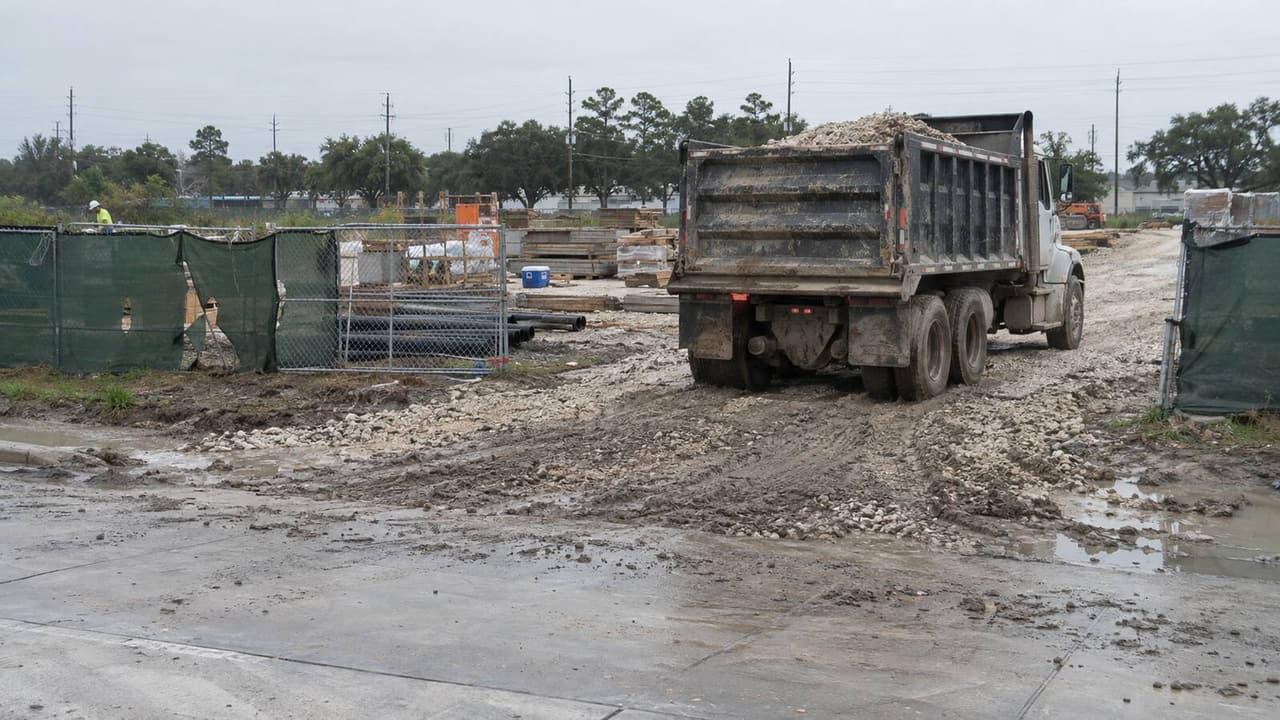
A turnaround does not wait for dry ground. Pipe, valves, scaffold and cranes need a hard, drained yard the day the unit comes down. Houston clay turns to mud after one storm. Laydown yard construction fixes that before the first truck arrives. Jimenes Construction clears, stabilizes, rocks and drains laydown and staging yards with its own crews and operators.
A laydown yard is the outdoor space where materials, pipe, equipment and vehicles wait until they are needed. We build them on your land or a leased tract for owners, general contractors and turnaround teams. We build the yard. We do not rent yard space or lease drop lots. Clearing the tract starts on our land clearing page, and the finished grade is covered under grading.
A yard starts with a cleared and proof-rolled subgrade. Where the clay is soft, the plan may call for lime or cement treatment. Next comes a geotextile fabric to AASHTO M 288, then crushed limestone or recycled crushed concrete base. We place the base in compacted lifts, then crown and ditch the yard so water runs off. Every truck gate gets a stabilized construction exit, which ties into our erosion control work.
Two Houston rules shape a rock yard before it is priced. The city's Infrastructure Design Manual counts gravel as impervious cover, so a yard inside city limits can trigger detention. In Harris County floodplain rules, storing equipment or materials counts as development. We check both, plus any detention the site needs, before we give you a number.
Coverage
Each yard is built to what it has to carry and how long it has to last.
Stabilized yards for pipe, valves, scaffold and exchangers, built ahead of the spring and fall turnaround windows near the Ship Channel.
Level rock pads with dunnage lanes for pipe, steel and module storage, graded so the stacks sit dry through a wet season.
Proof-rolling, undercut of soft spots, and geotextile under the rock. Lime or cement treatment goes in where the plan calls for it.
TxDOT Item 247 crushed limestone or Type D recycled crushed concrete, placed in lifts and compacted to the density on the plans.
Stabilized construction exits sized to the SWPPP detail, plus rock haul lanes that connect the gate to the storage bays.
Rock and fabric pulled, subgrade regraded, then topsoil and seed placed to reach final stabilization when the lease or project ends.
Our Process
Every yard follows the same five steps, from the first walk of the tract to a drained yard ready for pipe. Call (832) 576-3278 to book the site walk.
We walk the tract with your planner and check gate access, crane paths, drainage outfalls and the flood zone. Then we lay out storage bays, lanes and the truck exit.
Clearing, stabilization, fabric, base tons by type, ditching, the exit and restoration each price on their own line. You see what every part of the yard costs.
We run the floodplain and drainage checks with the City or Harris County. The SWPPP and exit go in when an acre or more is disturbed, then clearing and stripping start.
We proof-roll and fix the soft spots, roll out the M 288 geotextile, then place and compact crushed limestone or recycled concrete in lifts. The yard gets crowned and ditched.
We walk the yard with you before the first delivery and keep it up as the job runs. When the work ends, we pull the rock and fabric and restore the ground.
Timeline
These are planning ranges, counted from mobilization to a yard that can take its first delivery. Your signed schedule sets the real dates.
| Project Type | Typical Size | Duration |
|---|---|---|
| Construction exit and small staging pad | Under 1 acre | 3 - 7 Days |
| Contractor or staging yard | 1 - 3 acres | 1 - 3 Weeks |
| Turnaround laydown yard | 3 - 10 acres | 2 - 5 Weeks |
| Large pipe or module yard | 10+ acres | 4 - 8 Weeks |
| Yard removal and restoration | Per yard | 1 - 3 Weeks plus grow-in |
Engineering & Compliance
A laydown yard is a road without asphalt. It has to carry wheel loads on clay through a Houston rainy season.
Why Jimenes
A yard that runs late pushes the whole turnaround. We schedule back from your first delivery date and build around the spring and fall rain.
Rock dumped on wet clay sinks, ruts and needs top-ups all job long. We proof-roll, fix soft spots and lay stabilization fabric first, so the base stays on top.
Yards change hands between clearing subs, rock haulers and finish crews. One superintendent runs all of it and answers the phone.
Clearing, fabric, base tons, ditching and the exit each get a line. Change orders are signed before the work starts.
Credentials
Texas has no license for yard builders or other site-work firms. Each yard proposal comes with our insurance certificate, and these four tiles are what a plant or GC can check.
Where We Work
Our yards go up along the Ship Channel industrial corridor, from Galena Park and Pasadena to Baytown and Mont Belvieu, and south to the plants at Texas City and Freeport. Every job runs out of our Houston base. Looking for a laydown yard contractor near me? These are the cities we cover.
Good Questions
Got a turnaround date or a big job coming? Call the superintendent who will lay out and build your yard.
Talk to a BuilderA laydown yard is the outdoor space where materials, pipe, equipment and vehicles wait until they are needed. A staging area is where that material gets sorted and set up for the next step. On most sites they are the same yard with different bays. On a turnaround the yard also holds scaffold, exchangers and tool cribs. Keeping it running through the job is part of our jobsite support work.
Both fit TxDOT Item 247, so both build a solid yard. Crushed limestone is a Type A base. Recycled crushed concrete is a Type D base, and it has to be free of rebar with no more than 1.5% deleterious material. Recycled concrete is stocked around Houston and often prices lower. The depth depends on the loads and the subgrade, and a geotextile fabric goes under either one. Haul roads to the gate use the same materials on our access roads page.
There is no flat rate, because two yards on two tracts price differently. The drivers are the acres, the subgrade, and the base type and depth. Then come the fabric class, the haul distance, the drainage and detention, the truck exit and the restoration. We do not publish a price per acre, because a number given before the site walk is a guess. Ask for the free written estimate instead, with every line broken out.
Often, yes. Disturb one acre or more and TCEQ TXR150000 calls for a written storm water plan and a posted site notice. Inside city limits, the Houston IDM counts gravel as impervious cover, so a rock yard can trigger detention. In a Harris County floodplain, storing equipment or materials, placing fill, and even fencing all count as development. Inside a plant, the owner's permit to work may apply on top of that. We line up the right ones on our SWPPP page.
Gulf Coast turnarounds usually run in two windows: spring, from late February through May, and fall, from September through November. Start planning with us as soon as the date is set. Rain and soft subgrade drive the days, and plant badging takes time. The more lead time we have, the more sure the yard is ready before the first delivery.
We pull the rock for reuse or haul-off, lift the fabric, regrade the subgrade, then place topsoil and seed. Under TXR150000, final stabilization means 70% of the native ground cover is back before the Notice of Termination. Many leases also require the tract to return to its original condition, so check your lease terms early. Removal and haul-off run with our other site services.
Keep Reading
A rock yard is one piece of the site. These four services usually get built around it.
Silt fence, construction exits and stabilization that keep the yard off the street.
Learn MoreBuilt On Integrity. Ready Before the Window.
Free estimates, line-item pricing, and our own crews from clearing to restoration.



 Permitted & Inspected City of Houston and Harris County
 Workers’ Comp Full crew coverage
 Warranty 1-yr workmanship



 OR CALL (832) 576-3278