


 Isolated pads poured to the machine drawings
HVAC & RTU Pads
Ground pads and rooftop curb pads for condensers, air handlers and packaged rooftop units, sized to the unit and anchored against wind uplift.
Commercial & Residential Concrete
Isolated concrete pads for generators, HVAC units, transformers, chillers and tanks across Greater Houston. Anchored to the machine drawings, poured by our own crews, and built for expansive clay and hurricane winds.
Service Overview
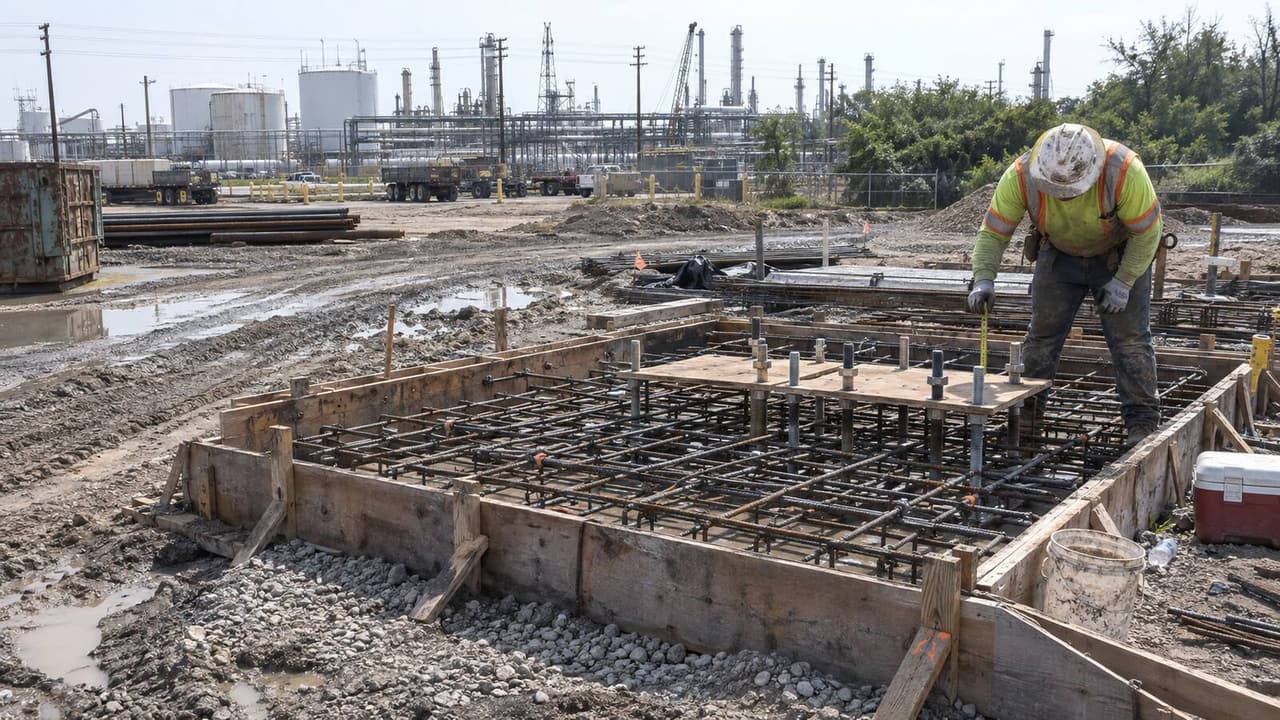
An equipment pad has one job: hold a heavy machine level and still. On Houston's expansive clay, a pad poured thin and without the right steel swells, shrinks, and cracks with every wet-and-dry cycle. Once it tilts, the anchor bolts loosen and the vibration climbs. The warranty on a costly machine then starts to read like fine print. A pad engineered for the machine and the soil fixes that for good. Jimenes Construction is a self-performing concrete contractor with 23 years in Houston clay. Our own crew sets the anchor-bolt template and ties the steel. We finish every pad to the machine drawings.
Every pad gets an isolation joint that separates it from the building slab, so it moves on its own and stays flat and put under load. A pad that carries a spinning or pounding machine is a different animal, so see our machine foundations page for that work. For the flatwork a pad ties into, see concrete slabs.
Houston adds two problems most pad specs skip. The clay under most of the city swells and shrinks with the weather, so a pad needs the right thickness and steel to bridge it. And hurricane season runs June 1 through November 30, so outdoor gear needs wind-uplift anchoring sized to the design wind load and the weight of the unit. On a floodplain lot we raise the pad above the flood elevation. Pads at a dock or truck well often run with our loading dock and dock apron work.
Coverage
From a single rooftop unit to a row of tank pads, we form, anchor and pour all six in house.
Ground pads and rooftop curb pads for condensers, air handlers and packaged rooftop units, sized to the unit and anchored against wind uplift.
Reinforced pads for standby and diesel generators, with the anchor template, conduit stub-ups and fuel-line sleeves set before the pour.
Utility-spec pads with grounding, conduit windows and cable pull sections cast to the CenterPoint or power company detail.
Thickened pads and inertia bases for chillers, cooling towers and pumps that carry real weight and some vibration.
Ringwall and full pads for storage tanks, compressors and process vessels along the Ship Channel and Grand Parkway corridors.
Raised curb pads inside mechanical rooms and plants that lift equipment off the floor and keep water away from the base.
Our Process
Five steps, the same on a single generator pad and on a row of tank pads. Call (832) 576-3278 to start at step one.
We read the equipment cut sheets, weights and anchor pattern, check truck access and the soil, then size the pad before we price it.
A line-item quote tied to the machine loads: pad thickness, rebar, anchor-bolt spec, wind-uplift anchoring and any elevation for a floodplain lot.
Permit pulled with Houston or your county where the pad needs one. Pad located, forms set and braced. Finished height set above the flood elevation if required.
Anchor-bolt template set to the drawings and surveyed, rebar chaired, conduit and sleeves cast in, then the pre-pour inspection before any concrete.
One pour, vibrated and finished flat, cured to strength. The bolts line up and the machine sets down without a shim.
Timeline
Real ranges from our own job records, from mobilization to set-down.
| Project Type | Typical Size | Duration |
|---|---|---|
| Single HVAC or generator pad | 4x4 to 8x10 ft | 3 - 7 Days |
| Transformer or switchgear pad | 6x8 to 12x20 ft | 1 - 2 Weeks |
| Chiller, tower or tank pad | 200 - 1,000 sq ft | 1 - 3 Weeks |
| Multiple pads on one site | Varies by count | 2 - 4 Weeks |
| Indoor housekeeping pad package | Per plant | 3 - 7 Days |
Engineering & Compliance
Houston clay moves and the wind blows hard. We build the pad around the machine weight, the anchor pattern and the soil under it.
Why Jimenes
Pads fail at the hand-offs. Our own crew sets the anchor template, ties the steel and finishes the pad, so nothing gets lost between a forming sub and the electrician.
We know how this soil moves and how much pad it takes to keep a machine level through a full wet-and-dry year.
The template gets surveyed before the truck rolls. The machine drops onto the bolts without field-drilling or a stack of shims under the frame.
Pad, steel, anchor bolts, sleeves and any elevation each get their own line. You see what you are paying for, and change orders are signed before the work.
Credentials
Texas does not license concrete contractors, so we send the insurance certificate and the engineer's letters with every proposal. Here is what a pad contractor in Houston can actually show you.
Where We Work
Headquartered in Houston and pouring equipment pads across the Greater Houston area, from inside the 610 Loop out to the Ship Channel and Grand Parkway plants. If you searched for an equipment pad contractor near me and landed here, this is the radius we cover. We can be on site the same week.
Good Questions
Still not sure? Call and the person who will run your pour will answer your questions.
Talk to a BuilderIt depends on the machine weight and the soil. Most HVAC and generator pads run 4 to 8 inches with a single or double rebar mat. Heavier gear like chillers, transformers and tanks gets thicker and more steel. On Houston's expansive clay we add thickness and steel so the pad bridges the soil instead of cracking with it. If the machine spins or pounds, it needs a machine foundation built for those loads.
We anchor outdoor gear to the full design wind load, uplift included. The anchor bolts are sized and embedded to ACI 318 Chapter 17, so the unit stays put when the wind pushes up and sideways. Hurricane season here runs June 1 through November 30, so this is not a detail we skip. Rooftop units get pads and clips rated for the same load.
There is no flat rate, and two pads the same size can price very differently. The main things that move the cost are:
Sometimes. A small indoor housekeeping pad often does not, but a generator, transformer or any pad tied to electrical or mechanical work usually pulls a permit. Inside the city it comes from the City of Houston. Outside city limits it comes from Harris County Engineering or your county office. Transformer and switchgear pads also follow the power company detail. We pull the permit and book the inspections.
Yes. We set the anchor-bolt template to your cut sheets and anchor pattern before the pour, then survey it so the machine drops onto the bolts. That means no field-drilling and no stack of shims under the frame later. Send us the cut sheets, the weights and the anchor pattern and we will build the pad around them. The pad usually ties into a concrete slab we can pour in the same trip.
An equipment pad supports static gear that mostly just sits there: HVAC units, generators, transformers, tanks. A machine foundation is designed for the dynamic loads and vibration of rotating or reciprocating machines, so it is often bigger, heavier and isolated from the floor. We build both. Call (832) 576-3278 and we will tell you which one your equipment needs.
Keep Reading
A pad rarely travels alone. These are the concrete services that most often run with it.
Reinforced foundations and inertia bases for pumps, presses and rotating equipment that vibrate under load.
Learn MoreStructural and industrial slabs on grade that pads tie into, engineered for Houston expansive clay.
Learn MoreDock walls, aprons and approach slabs built for truck and trailer loads at a warehouse or plant.
Learn MoreSlabs, drilled piers and grade beams poured by our own crews for buildings across Houston.
Learn MoreBuilt On Integrity. Poured To Plan.
Free estimates, line-item pricing, and our own crews from the anchor template to the last trowel.


 Permitted & Inspected City of Houston and Harris County
 General Liability $2M per occurrence
 Workers’ Comp Full crew coverage
 Warranty 10-yr structural, 1-yr workmanship



 OR CALL (832) 576-3278