


 Own crews and equipment operators
Temporary Construction Access Roads
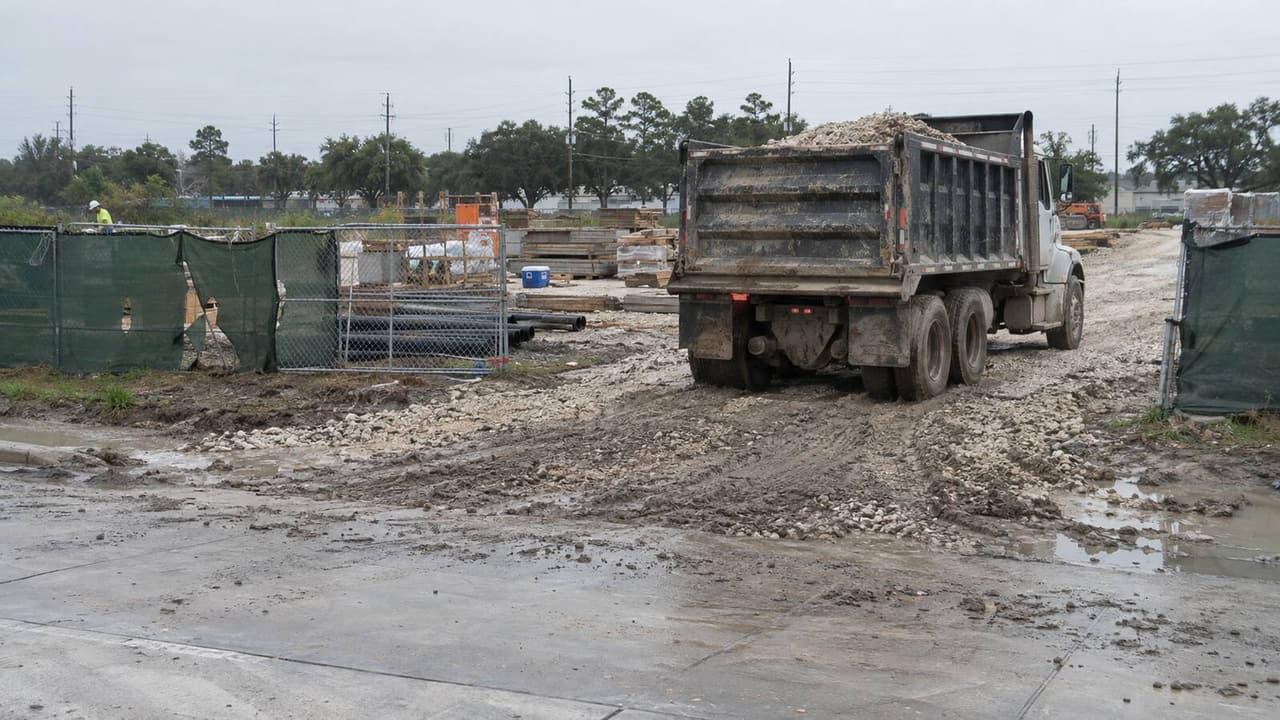
Rock haul roads that get trucks and equipment from the gate to the building pad, then come out when paving or backfill starts.
Industrial & Commercial Site Work
Temporary and permanent construction access roads for plants, pipelines, lease sites and large commercial jobs in the Houston region. Our own crews stabilize, rock and ditch each route to carry loaded trucks and cranes.
Service Overview
One loaded dump truck can rut a wet clay road in a single pass. A crane cannot set up on ground like that at all. Temporary access roads solve both problems. Jimenes Construction builds construction access roads, lease roads and haul roads with its own crews and equipment operators.
A construction access road runs from the public road to your work point. That point might be a plant unit, a pipeline right-of-way, a tank or substation site, or a lease pad. These are private site roads, not the freeway feeder roads that share the name in Houston. We build them for owners, general contractors, and pipeline and utility contractors, and the work ties straight into our site preparation scope. The road usually ends at a building pad or a laydown yard.
The route is sized to what drives on it. Texas legal trucks carry up to 20,000 lb on a single axle and 80,000 lb gross. OSHA's crane rule calls for firm, drained and graded ground under every crane setup. Soft clay gets lime or cement treatment where your engineer calls for it, then geotextile or geogrid and compacted flex base, crowned to shed water. Our grading crew shapes and compacts every lift.
Where the road meets a state highway, the TxDOT Houston District issues the driveway permit. On county roads in unincorporated Harris County, the permit comes from the Office of the County Engineer. Ditch crossings get a culvert sized by the permitting agency, and the gate gets a rock construction exit. That exit keeps trucks from tracking mud onto the highway, and erosion control keeps it and the side ditches working through Gulf rain.
Coverage
Every road starts with two questions: what will drive on it, and how long does it need to last?
Rock haul roads that get trucks and equipment from the gate to the building pad, then come out when paving or backfill starts.
Roads to units, tank farms and substations, built for heavy haul and crane moves inside or next to an operating site.
Access across pasture and wet ground to pipeline and power line work, with mats coordinated where rock is not allowed.
All-weather lease and pad roads on crushed limestone or recycled concrete flex base, crowned and ditched to drain.
Firm, level, drained crane pads and turn radii built to the lift plan, so mats sit on solid ground.
Proof-rolling, lime or cement treatment, and geotextile or geogrid so the base does not push down into the clay.
Our Process
Five steps, from the first route walk to a road your trucks can use on day one. Book the route walk at (832) 576-3278.
We walk the route with your team and note ditches, pipelines, wet spots and turn radii. Then we list the heaviest truck and crane that will use the road.
Clearing, subgrade treatment, fabric or grid, base tons, culverts, construction exit, mat coordination and removal each get their own line.
Driveway permit with TxDOT or the county, culvert sizing, a storm water plan if 1 acre or more is disturbed, and the 811 call. The construction exit goes in first.
Clear and strip, proof-roll, treat soft clay where specified, lay fabric or geogrid, place and compact flex base in lifts, then crown the road and cut side ditches.
Blade and top up the road through the job. When you are done, pull the rock, fabric and temporary culverts, then regrade and seed the route.
Timeline
Each range counts from the day we mobilize to the day the road opens to traffic. Permit review is extra and runs on the agency's clock.
| Project Type | Typical Length | Duration |
|---|---|---|
| Construction exit and short entrance road | Under 300 ft | 2 - 5 Days |
| Temporary site haul road | 300 - 1,500 ft | 1 - 2 Weeks |
| Lease or pad road with culvert crossing | Up to 1/2 mile | 2 - 4 Weeks |
| Plant or pipeline road, stabilized subgrade | 1/2 - 2 miles | 3 - 8 Weeks |
| Road removal and restoration | Per road | 1 - 2 Weeks plus grow-in |
Engineering & Compliance
An access road is judged by the heaviest thing that crosses it on its wettest day.
Why Jimenes
Base laid straight on wet gumbo gets pressed into the clay by the first loaded truck, and ruts follow. We proof-roll, treat soft spots and lay fabric or grid before a ton of base goes down.
A road that holds pickups can still fail under a crane move. We ask for the crane and truck list up front, then build the pad and route for it.
Driveway permits, culverts, rock haulers and mat crews all touch one road. One superintendent schedules every one of them and is the person you call.
Surprise costs show up at closeout, when the road has to come out. We price removal and restoration on their own lines from day one.
Credentials
No state license exists for site-work contractors in Texas. Our insurance certificate goes out with each access road bid, and these four items are what you can check.
Where We Work
Headquartered in Houston and building construction access roads from the Ship Channel plants to the pipeline corridors west and south of town. If you searched for road builders near me, these are the areas we cover.
Good Questions
Planning a road for a crane move, a pipeline spread or a new site? Call and talk to the superintendent who will build it.
Talk to a BuilderA temporary access road is a rock road from the public road to your work point. It carries trucks, equipment and cranes during construction, then usually comes out at the end. A permanent road uses the same base built to last, often with a stabilized subgrade and later paving. On TxDOT bridge jobs, temporary access is its own pay item that covers design, building, upkeep and removal. In Houston the same name also means a freeway feeder road, which is a different kind of job. To pave a road that stays, see our commercial paving page.
There is no single number. Rock depth is set by wheel load, tire pressure, truck passes, allowed rutting and how strong the subgrade is. A legal Texas tandem axle can carry 34,000 lb, so loaded tandem dump trucks drive much of the design. Crane setups also need the firm, drained and graded ground OSHA requires. Geogrid or fabric can cut the rock you need. We build to the section on your plans, or propose one for your engineer to approve. See grading for how we shape and compact it.
It depends on the traffic and how long the road stays.
It depends on where the road meets the public road and how much ground you disturb.
Price depends on the route, and a short entrance and a two-mile plant road cost very differently. The main drivers are:
The rock comes up and gets reused or hauled off. Fabric and temporary culverts come out, and the route is regraded. Under Nationwide Permit 33, temporary fill in waters must be removed and the ground put back to its old grade and replanted. TXR150000 asks for 70% of the native plant cover back before the permit closes. Your lease or the landowner may set more. See erosion control for final stabilization.
Keep Reading
A road rarely travels alone. These trades usually share the job, at one end of the road or along its ditches.
Built On Integrity. Ready for the First Load.
Free estimates, line-item pricing and our own crews from the gate to the work point.



 Permitted & Inspected City of Houston and Harris County
 General Liability $2M per occurrence
 Warranty 1-yr workmanship



 OR CALL (832) 576-3278