


 Self-performed operators and equipment
Pool & Backyard Digs
Pool excavation to the builder's layout, with tight access, spoil haul-off and pumps on standby when the hole takes water.
Residential & Commercial Excavation
Excavation and earthwork for Houston pools, ponds, footings, detention cuts and commercial pads. Our operators dig to grade, control the water and put every yard of spoil where it belongs.
Service Overview
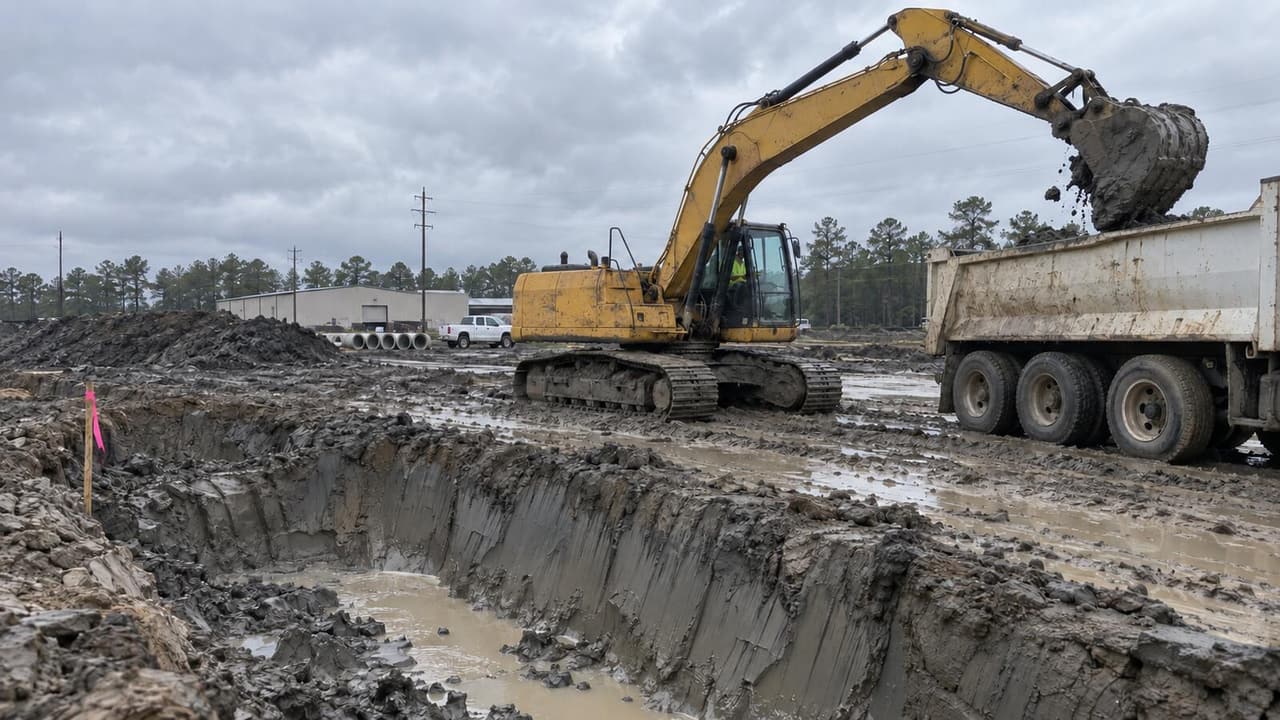
In Houston, you often hit water before you reach the bottom of the hole. The clay above it cracks, slumps and swells with the weather. Excavation here means digging to grade, holding the walls and keeping the water out until the next trade is done. As a self-performing excavation contractor in Houston, TX, Jimenes Construction runs that work with its own crews. The operators on the machines are ours, and one superintendent answers for the grade on your dig.
Homeowners and builders call us for pool digs, stock ponds, footing and grade beam trenches, and shop or barndominium pads. General contractors and developers call for mass excavation, detention cuts, structure excavation and cut-to-fill balancing. Same crews, same rules, different scale. This work runs right beside our grading, detention pond and trench shoring crews.
Water and walls drive every Houston dig. On one northwest Houston site, borings hit water at 12.5 feet, and it rose to 9 feet within 15 minutes. That is common here, and it changes with the rain. Light seepage gets a sump and a pump. Heavy water needs well points or deep pumps, planned by an engineer.
The walls and the spoil get the same care. Houston clay cracks when it dries and has often been dug before, so OSHA rarely rates it the strongest soil type. Dug-out dirt is sorted, since not all of it can go back. Suitable clay returns as backfill, and the rest is hauled off. We run the haul-off and hand a firm, dry bottom to the foundation crew.
Coverage
Excavation and earthwork for homes, acreage and commercial sites. Our own crews run the digging on every one.
Pool excavation to the builder's layout, with tight access, spoil haul-off and pumps on standby when the hole takes water.
Stock ponds and acreage tanks cut, shaped and compacted, with the spoil used to build the dam or spread on site.
Footing and grade beam trenches cut clean to depth and width, with bottoms kept dry and firm for the foundation crew.
Commercial cut and fill balanced to the civil plan, with suitable clay moved to pads and the rest hauled off.
Detention ponds and floodplain mitigation cuts dug to the engineer's volume and side slopes.
Deep excavations for vaults, lift stations and pits, with shoring and groundwater control run to the engineer's plan.
Our Process
Five steps on every dig, from a backyard pool to a ten-acre commercial cut. It all starts when you call (832) 576-3278 and send us your borings or site plan.
We read the borings for soil type and water depth. Then we plan the slope, bench or shoring and decide where the spoil goes.
We call the 811 ticket, check private lines and pull permits. We photograph nearby foundations, walls and paving before we dig.
We cut to grade in lifts, then slope, bench or set trench boxes. A competent person checks the hole every day and after rain.
Sumps or engineered well points keep the bottom dry. Spoil is sorted, stockpiled back from the edge, and hauled with tickets.
We check the bottom firm and dry, then hand it to the next trade the same day. Backfill goes back in tested lifts at closeout.
Timeline
Planning ranges from a backyard dig to a commercial cut, from mobilization to final grade.
| Project Type | Typical Size | Duration |
|---|---|---|
| Residential pool dig | 1 pool | 1 - 2 Days |
| Footing and grade beam trenches | 1 house or shop | 1 - 3 Days |
| Stock pond or acreage tank | 1/4 - 1 acre of water | 1 - 2 Weeks |
| Commercial detention pond | 1 - 5 acres | 2 - 6 Weeks |
| Mass excavation and earthwork | 5+ acres | 4 - 12 Weeks |
Engineering & Compliance
Houston clay stands up fine on a dry morning. After a storm, the same wall can slump. We plan for the wet day.
Why Jimenes
Brokered excavation crews change daily, and nobody owns the grade. The people in our excavator seats are on our payroll, and one superintendent keeps the same crew on your dig until it is backfilled.
Houston holes fill with water and go soft, and the bid never priced it. We read the borings, price pumps or well points as a line item, and keep the bottom dry.
Digging beside a building can undermine it, and pumping can settle the ground around it. We take pre-dig condition photos, get an engineer's review for any cut below a footing, and shore where needed.
Your invoice splits out the cut, the haul-off, any import fill, the pumps and the density tests. Ask for the haul tickets and you get them. Extra yards are priced in writing before we dig them.
Credentials
Excavation contractors carry no state license in Texas. Before anyone digs, ask to see the insurance, the permits and the warranty in writing.
Where We Work
Our excavators work tight inner-Loop backyards, suburban pool lots and open acreage out past the suburbs. Looking for excavation companies near me? These are the towns where we dig most. Call to check your address.
Good Questions
Wondering about water, walls or where the dirt goes? Send us your plans or borings, or call and ask.
Talk to a BuilderAn excavation contractor digs the ground to a planned grade and shape. That covers pools, ponds, footings, building pads and utility trenches. The job is three things at once: holding the walls with a slope, bench or shoring, controlling the water, and managing the spoil. We hand a firm, dry bottom to the next trade. Excavation is one piece of full site preparation.
Every dig is priced on its own. We quote by the cubic yard or by the job, after we see the plans and borings. These things move the excavation cost:
Houston has few basements. Water sits close to the surface, and the clay pushes hard on buried walls. Digging one is possible, but it takes an engineer, full dewatering and serious waterproofing, which raises the cost. Most Houston homes sit on slabs with grade beams, and we trench those beam lines instead. The concrete foundations crew takes it from there.
Texas lets you build a pond on your own land for household and livestock use without a state water-rights permit. The limit is 200 acre-feet of normal storage. County floodplain and drainage rules can still apply. Inside Houston city limits, digging more than 5 feet deep calls for a City excavation permit. You also cannot dam or divert runoff so it floods a neighbor. Send us your lot and we will sort out what applies.
Hitting water is common in Houston. Light seepage gets a sump pit and a pump. Heavy water needs well points or deep pumps, planned by an engineer. On City of Houston structure work, the spec holds groundwater at least 2 feet below the foundation base. Pumping runs until the structure is heavy enough not to float. Clean groundwater is discharged through sediment controls where the rules allow. It never goes into TxDOT right-of-way. On a pool dig, we keep the hole pumped so the empty shell does not float.
OSHA calls for a protective system at 5 feet deep, and shallower digs can need one too. The options are sloping the walls back, benching them in steps, a trench box, or engineered shoring. Houston clay rarely rates as the strongest soil. Clay with water seeping out is rated the weakest, so the walls lay back farther. Past 20 feet, a registered engineer designs the protection. A cut below a nearby footing needs bracing or underpinning, or an engineer's sign-off. Our trench safety and shoring crews set that protection on your dig.
Keep Reading
A dig rarely travels alone. The walls, the water and the leftover dirt each lead to one of these.
Dug. Dry. To Grade.
Send us the plans or a pin on the map. We will price the cut, the water and the haul-off line by line, for free.



 Permitted & Inspected City of Houston and Harris County
 Warranty 1-yr workmanship



 OR CALL (832) 576-3278