


 Grade shots from the wet spot to the outlet
Regrading & Swales
Reshape the yard so water runs off the foundation and down a shallow, sodded swale to the outlet. We keep the swale at least 2 feet off the property line.
Residential Drainage & Site Work
Yard drainage for Houston lots that hold water long after the rain stops. We shoot the grades, find your legal outlet, and build the swales, inlets and pipe that get the water there.
Service Overview
Most Houston yards have only a few inches of fall to the street. The clay under them seals shut once it is wet, so water sits after every storm. Yard drainage fixes that as a system. We find where the water comes from, where it can legally go, and build the path between. Jimenes Construction does the work with its own crew and grading machines, and has 23 years on this Houston clay.
Yard drainage works as a mix of tools, and each lot gets its own blend. We regrade and cut shallow swales to move surface water. We set catch basins and area drains at low spots, and channel drains where water crosses a driveway or patio. Roof water gets piped away from the foundation to the curb or a pop-up emitter. A French drain comes in only when water is moving underground. Most yards need two or three of these working together.
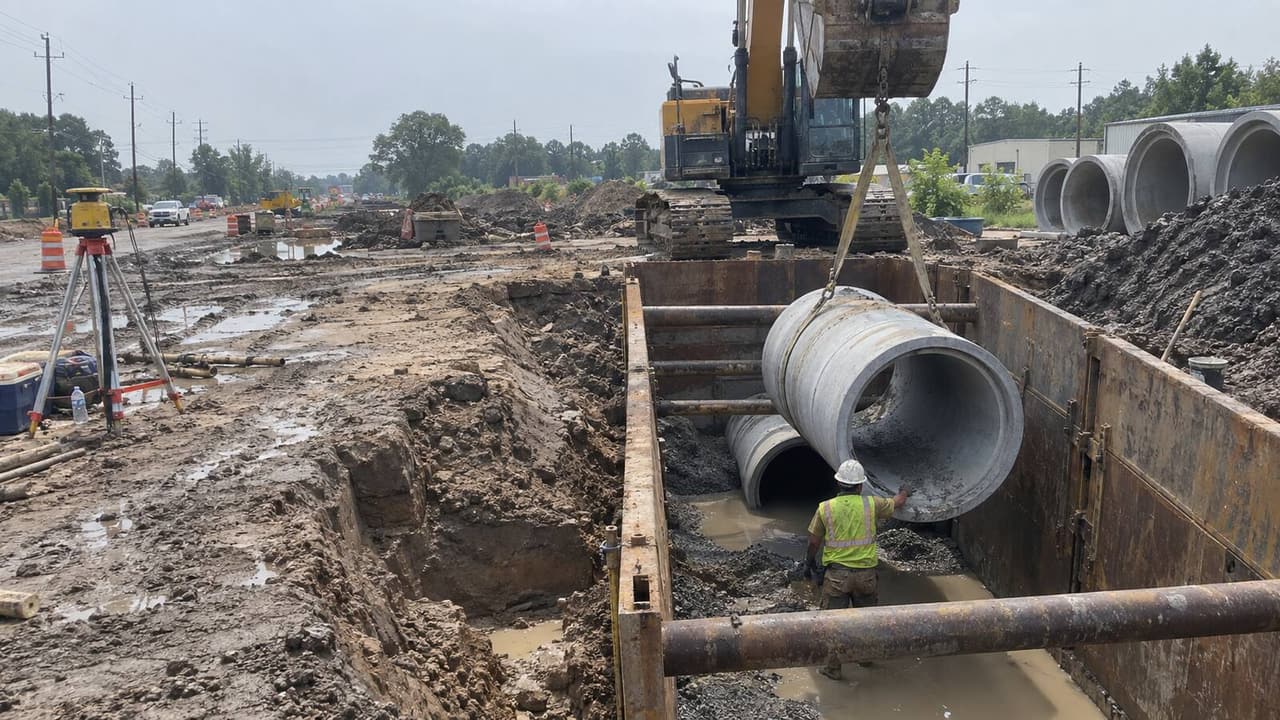
In Houston, your yard water has to reach an approved outlet. It cannot sheet onto the street or the lot next door. On a curb-and-gutter street, that means a 4-inch Schedule 40 pipe through the curb. On an open-ditch street, the pipe meets the ditch at a right angle, below the culvert. When new homes go up higher next door, older lots can end up as the low spot on the block. Raising a whole backyard even a few inches can add up to more fill than people expect. We check the City grading and fill dirt permit line before we order dirt, and build the culverts that keep open ditches flowing.
Coverage
Each tool fixes a different kind of wet. Most Houston yards get two or three working together.
Reshape the yard so water runs off the foundation and down a shallow, sodded swale to the outlet. We keep the swale at least 2 feet off the property line.
Grated inlets at low spots, and slotted channel drains where the driveway, patio or garage apron meets the lawn, all tied to solid pipe.
Roof water piped underground at least 5 feet from the foundation, out to the curb, a swale or a pop-up emitter set lower than the gutter line.
A rock-lined swale over fabric that carries storm water and reads as landscaping on dry days. It still needs fall and a legal outlet.
For a backyard lower than the street. A basin collects the water and a pump lifts it to a legal outlet, with a check valve and a yearly look.
Swales or inlets along the fence that catch water coming from next door and carry it to your own outlet.
Our Process
Five steps from the first rain walk to the hose test. Book your rain walk at (832) 576-3278.
We walk the yard, ideally after rain, and mark where water enters, stands and leaves. Roof, neighbors, patio and street all go on the map.
We shoot laser elevations from each wet spot to the curb, ditch or lowest legal point. That fall decides which tools will work.
One drawing shows the swales, inlets, pipe and outlet, each priced on its own line. Texas 811, City permits and any HOA review come before we dig.
Machines cut the swales and reshape the yard. Basins sit on crushed stone, and solid pipe is laid with steady fall and checked with the laser.
We hose-test every inlet, put back sod or rock, and walk you through where each line runs and how to keep the grates clear.
Timeline
Typical spans for common yard jobs, from the first dig to the walkthrough. Your estimate sets the real dates.
| Project Type | Typical Size | Duration |
|---|---|---|
| Downspout tie-ins to the curb | 2 - 4 downspouts | 1 Day |
| Catch basins with solid pipe | 1 - 3 inlets | 1 - 2 Days |
| Side-yard swale and regrade | One side yard | 1 - 2 Days |
| Full backyard system | Swales, inlets and downspouts | 3 - 5 Days |
| Low lot with pump or acreage ditch outlet | Pump basin or long ditch run | 1 - 2 Weeks |
Engineering & Compliance
A yard drains when water has fall and a legal place to go. These are the rules and specs we build to.
Why Jimenes
A swale dug by eye can leave a new puddle in the middle of the lawn. Our operators grade with machines and a laser, so every swale and pipe falls toward the outlet.
Flat lots fail when one tool gets forced on every problem. We measure your fall first, then price the swale, inlet, pump or French drain that fits it.
Texas law holds you liable for water you divert onto a neighbor. We send it to the curb, the ditch or another approved outlet, and never into the sewer line.
Each swale, basin, pipe run, pump and roll of sod gets its own line. You can phase the work and see what each part costs.
Credentials
No Texas state license covers yard drainage work. Inside Houston, the plumbing permit for inlet and downspout tie-ins comes from a City-registered master plumber or drain layer. These are the papers we carry on every yard.
Where We Work
We fix yard drainage on flat, older and HOA lots, from Bellaire and West U inside the Loop out to Katy, Pearland and Tomball. If you are looking for yard drainage contractors near you, these are the cities we serve. Call and we will set a time to walk your lot.
Good Questions
Not sure which fix your yard needs? Call, and we will set up a rain walk and grade shots on your lot.
Talk to a BuilderNo two lots drain the same way, so we price a yard drainage system by its parts. That lets you see each cost and phase the work. The main drivers are:
It depends on the problem. A landscaper handles plantings and sod. A plumber pulls the permit and ties drains into a line. A foundation company handles a foundation that is moving. A site-work contractor ties the whole system together: the grading, the swales, the inlets and the outlet. We coordinate the master-plumber permit for tie-ins. If the foundation itself is moving, bring in a foundation repair crew first.
In Houston clay, almost nothing soaks it up for long. A gravel pit or dry well turns into an underground bucket that fills and stays full, because the clay around it drains so slowly. The fix is to move the water to an outlet. Where the lot has fall, we regrade and cut a swale. A low spot gets a catch basin and pipe, and a yard lower than the street gets a pump. For water moving underground along the foundation, a French drain is the right tool.
Texas law lets water keep its natural path. Change that path so it floods a neighbor, and you can be liable under Texas Water Code 11.086. Talk to the neighbor first, and see an attorney if there is real damage. On your side, we can catch the water with a swale or inlets along the fence line and carry it to your own outlet. We do not build a berm that just pushes it onto someone else. On open-ditch streets, a ditch that holds water more than 48 hours after rain is a call to 311.
Often yes to one or both. Many Houston HOAs require architectural review before exterior changes, and we can provide a drawing for the submittal. The City wants a grading permit when fill tops 50 cubic yards, reaches 3 feet deep, or blocks a drainage path. No fill may go in the street right-of-way. Piping an inlet into the system takes a City plumbing permit from a registered master plumber, and downspout tie-ins can also go through a registered drain layer. Suburbs and the county set their own rules, so we check first. See grading for bigger earthwork.
Standing water at the foundation keeps the clay swinging between wet and dry, which is hard on a house. Good drainage keeps soil moisture more even and lets roof water out at least 5 feet from the walls. It does not repair movement that has already happened, so see foundation repair for that. Water also breeds mosquitoes, which go from egg to adult in about 7 to 10 days. Harris County Public Health asks residents to clear standing water around the home.
Keep Reading
A wet yard often needs a second trade. These four pair with yard drainage most.
Buried collector drains for water that moves underground along the foundation or side yard.
Learn MoreDriveway culvert pipe and ditch grading for lots on open-ditch streets and acreage.
Learn MoreConcrete trench drains built into driveways, patios and garage aprons.
Learn MoreMeasured Fall. Legal Outlets.
Free estimates, laser grade shots before we name a fix, and one crew from the rain walk to the final sod.



 Permitted & Inspected City of Houston and Harris County
 Workers’ Comp Full crew coverage
 Warranty 1-yr workmanship



 OR CALL (832) 576-3278