


 Self-performed crews on every phase
Pressed Concrete Piling Underpinning
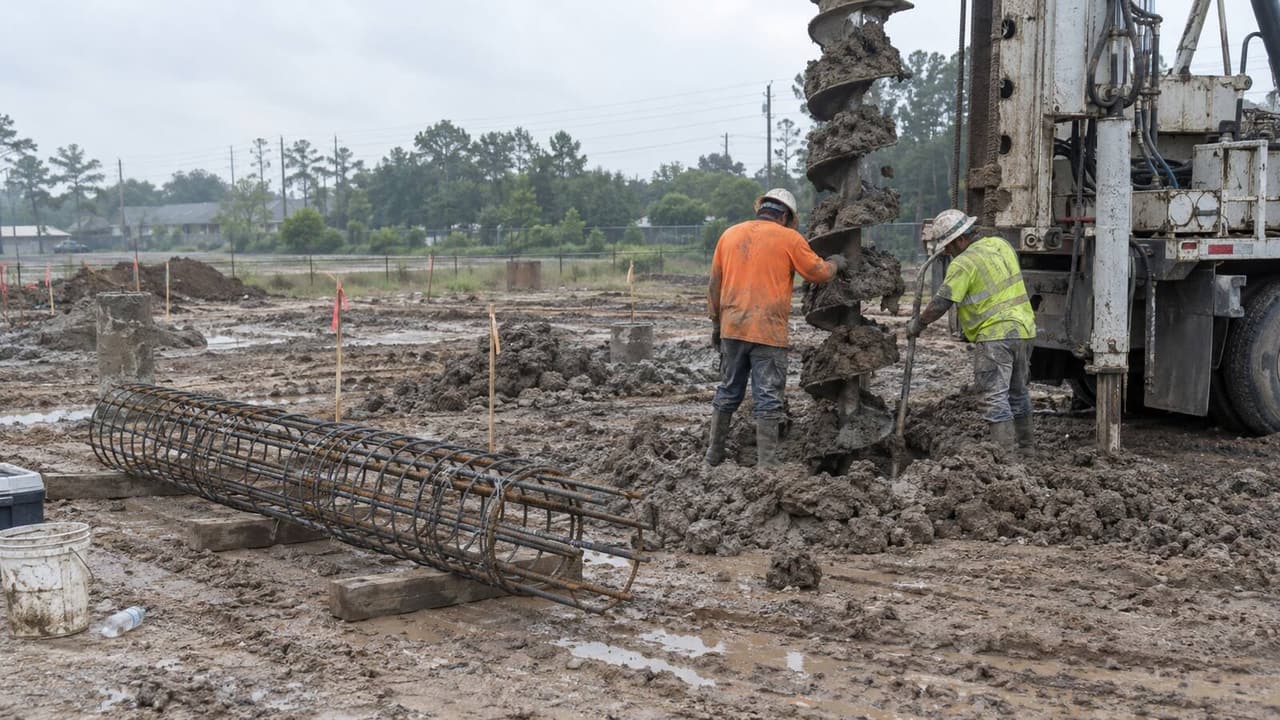
Steel-reinforced concrete cylinders driven straight down to load-bearing strata, then the slab is lifted back to level. The common fix for a settling slab-on-grade in Houston clay.
Commercial & Residential Concrete
Underpinning, slab leveling and drainage fixes for Houston foundations that have moved. Our own crews drill the piers, drive the pilings and lift the slab, built for expansive clay.
Service Overview
On Houston's expansive clay, a foundation is only as steady as the soil beneath it, and that soil never holds still. It swells after a storm and shrinks in a drought. That lifts one side of the slab while another drops. Thirsty tree roots and slow plumbing leaks pull the moisture out unevenly and speed the whole thing along. That movement is what sticks doors, opens stair-step cracks in the brick and leaves one corner of the floor running downhill. Foundation repair puts the house back to level and keeps it there, and Jimenes Construction self-performs every step with our own crews, engineered over 23 years for this ground.
That work runs on the same steps every time: the zip-level floor survey, the pier drilling, the piling driving and the slab lift. Nothing is brokered to a day-labor crew and handed back. We chase the water and the roots first, then set piers only where the survey says the house has actually dropped.
If you are building new, that is our concrete foundations work instead. For chipped, spalled or cracked surface concrete that is not structural, see concrete repair and restoration. Homes on drilled shafts are covered on our pier and beam page.
Coverage
The soil report and the elevation survey pick the method. We run all six with our own crew.
Steel-reinforced concrete cylinders driven straight down to load-bearing strata, then the slab is lifted back to level. The common fix for a settling slab-on-grade in Houston clay.
Bell-bottom or straight-shaft piers drilled below the active zone and cast in place. We use these where the clay is deep and the load is heavy, on both homes and light commercial.
Cement grout or expanding polyurethane foam pumped under a sunken slab to raise it. A fast, low-mess lift for garage floors, patios and interior slabs that have dropped.
French drains, grading, gutter extensions and soaker lines that keep the clay at an even moisture level. Fixing the water is what keeps the repair from coming back.
Vertical root barriers set between a large tree and the foundation, so roots stop pulling moisture from under one edge of the slab.
Epoxy and polyurethane injection for foundation cracks, plus re-shimming and beam repair for pier and beam homes that have racked or sagged.
Our Process
Five steps, the same on a settled bedroom corner and on a full perimeter lift. Call (832) 576-3278 to start at step one.
We walk the house, read the cracks and run a zip-level floor survey to map how far each area has dropped. That number, in inches, tells us what moved and by how much.
We find the driver first: tree roots, a plumbing leak, poor drainage or seasonal clay. Then we set pier type, pier count and lift target, with a Texas PE plan where the job calls for one.
A line-item quote by the pier, plus any drainage or plumbing test work. We pull the City of Houston or Harris County repair permit and book the inspection.
Crews dig the access holes, then drive pilings or drill piers to bearing. Synchronized jacks raise the foundation from there. We watch the survey marks come back to level as it rises.
We shim, backfill, patch the holes and re-check elevations. A post-lift survey, the engineer letter and the warranty go in your closeout packet.
Timeline
Real ranges from our own job records, from mobilization to post-lift survey.
| Repair Type | Typical Size | Duration |
|---|---|---|
| Slab leveling / mudjacking | 1 - 3 rooms | 1 - 2 Days |
| Perimeter pressed piling underpinning | 8 - 14 piers | 2 - 4 Days |
| Drilled pier underpinning | 10 - 20 piers | 4 - 7 Days |
| Pier & beam re-shim and beam repair | Whole home | 3 - 6 Days |
| Drainage correction / root barrier | Perimeter | 2 - 4 Days |
Engineering & Compliance
We fix whatever made the crack in the first place. Houston clay moves with the weather, so the repair has to reach past it.
Why Jimenes
The person who reads your floor survey is the person whose crew drives the piers. Nobody on your job works on commission for every pier they sell.
A lift without a drainage or root fix moves again. We chase the water first, then set piers only where the survey says the house has actually dropped.
We survey the floor before the lift and again after. You see the elevations come back to level in inches, on paper, at both readings.
Every pier, drain line and injection gets its own line. You see why a corner repair costs less than a full perimeter, and change orders are signed first.
Credentials
Texas does not license concrete contractors, so we send the insurance certificate and the engineer's letters with every proposal. Here is what a foundation repair contractor in Houston can actually show you.
Where We Work
Headquartered in Houston and repairing foundations across the Greater Houston area, from inside the 610 Loop out past the Grand Parkway. If you searched for foundation repair near me and landed here, this is the radius we cover. We can be on site the same week.
Good Questions
Still not sure? Call and talk it through with the person who will run your repair.
Talk to a BuilderLook for signs the house has actually moved. A few of the common ones:
There is no flat rate, and the same house can price two ways on two lots. The foundation repair cost depends on the pier count, the pier type, how far the house has dropped, and whether drainage or a plumbing leak has to be fixed too. Slab leveling with foam is the cheapest fix, and a full perimeter underpinning is the most. We price it by the pier, so you see the number before you commit. Ask for the free written estimate.
Water in the clay, almost always. Houston sits on expansive clay with a plasticity index in the 40s and 50s, and it swells and shrinks as moisture changes. Trees and thirsty roots pull water out from under one edge, and slow plumbing leaks do the opposite. The region also has more than 300 mapped surface faults and long-term ground subsidence from pumping. We find the driver first, then fix the foundation.
It depends on the soil and the load. Pressed concrete pilings are driven straight down and are the common fix for a settled slab-on-grade home. Drilled piers are cast in place and reach deeper, which suits heavy loads and very deep clay. Homes already built on drilled shafts are covered on our pier and beam page, and the drilling itself on our drilled piers and foundation drilling page. The floor survey tells us which one your house needs.
Usually yes to the permit. Inside city limits the repair permit comes from the City of Houston, and outside it comes from Harris County Engineering or your county office. Many underpinning jobs also need a Texas PE plan, and the city often wants an engineer letter at closeout. Texas does not license concrete contractors, so ask any company for the insurance certificate and the engineer's letters instead. We pull the permit and book the inspection.
For most homes, yes. Underpinning and leveling cost far less than a new foundation and keep you in the house. We only recommend a full replacement when the existing foundation is too far gone to save, and that is rare. If you are building new instead, see our concrete foundations page. For cracked or spalled surface concrete that is not structural, see concrete repair and restoration.
Keep Reading
A repair rarely travels alone. These are the concrete services that most often run with it.
New slabs, piers and grade beams poured by our own crews when a repair is not enough.
Learn MoreDrilled piers and grade beams for crawl-space homes and floodplain lots.
Learn MoreBelled and straight-shaft piers drilled below the active zone to carry the load.
Learn MoreCrack, spall and surface repair for driveways, walks and slabs that are not structural.
Learn MoreBuilt On Integrity. Leveled To Plan.
Free floor surveys, pricing by the pier, and our own crews from the first survey mark to the last backfill.



 Permitted & Inspected City of Houston and Harris County
 General Liability $2M per occurrence
 Workers’ Comp Full crew coverage
 Warranty 10-yr structural, 1-yr workmanship



 OR CALL (832) 576-3278