


 Delivered, spread and compacted
Low Yard & Lot Raising
Bring up a yard or lot that sits low and holds water, then slope it so rain runs to the street or ditch.
Residential & Acreage Dirt Work
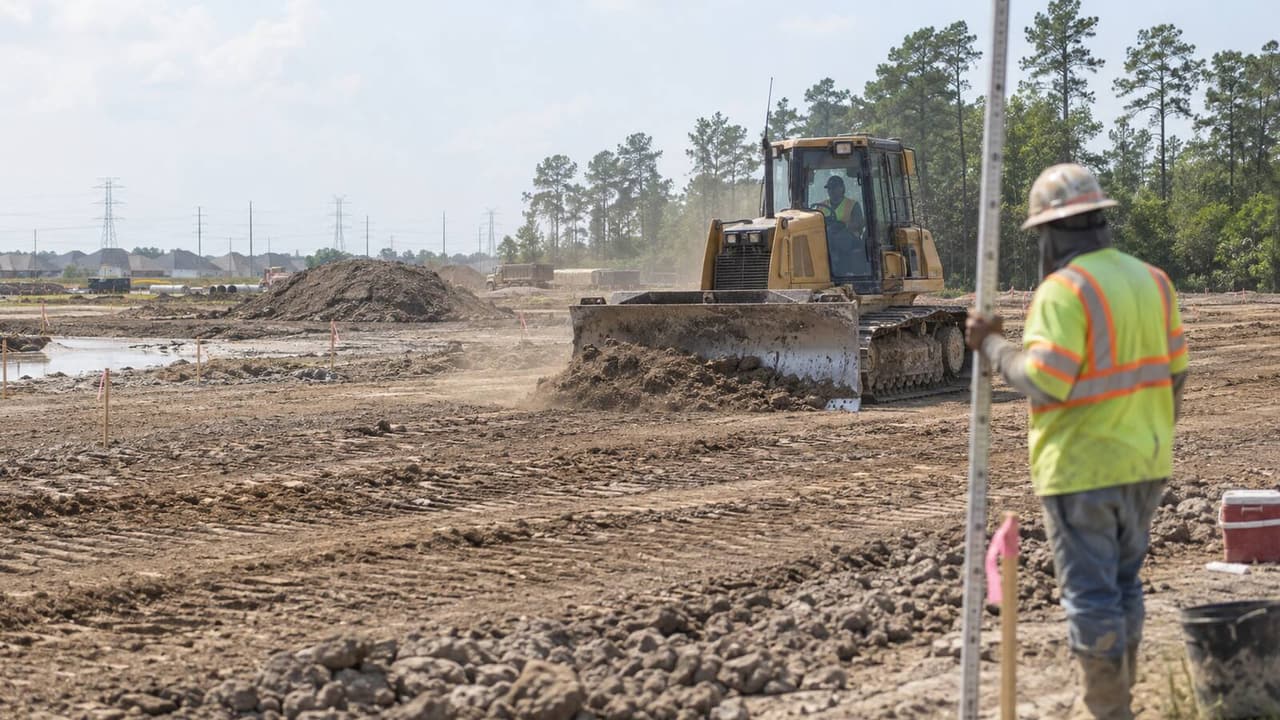
Fill dirt delivered, spread and packed in layers by our own operators. We raise low yards, fill old pools and ponds, and build acreage pads and driveways across Greater Houston.
Service Overview
Low spots in a Houston yard hold water for days after a storm. The fix is the right dirt, placed in thin layers and shaped to drain. A low spot against the house also keeps the clay under the slab wet, which can lead to house foundation repair down the road. Jimenes Construction delivers fill dirt and does the dirt work with our own operators. We handle one backyard or a ten-acre homesite the same careful way.
The grade of dirt matters more than its price. Common fill raises a low yard or a pasture. Select fill is a sandy clay tested to a plasticity index of 7 to 20, so it packs hard under a house pad or a drive. Bank sand beds pipe and sits under flatwork. Sandy loam or topsoil goes on top so grass roots, and grading shapes the finished surface.
On acreage, dirt work means a pad, a driveway line, a stock pond, or leveling for a barn. Every job starts the same way. We strip the grass, loosen the ground, then spread the fill in lifts of 6 to 12 inches and pack each one. Wet clay waits until it dries back. We grade so water still leaves your lot the way it did before. Texas law bars you from turning your runoff onto a neighbor in a way that floods them. See yard drainage and gravel driveways for the work that often runs with it.
Coverage
Six jobs we run most often. Each one starts with picking the right dirt.
Bring up a yard or lot that sits low and holds water, then slope it so rain runs to the street or ditch.
Tested sandy clay for pads and drives, plus clean bank sand for pipe bedding and under flatwork.
A loose, fertile top layer of about 4 to 6 inches, so new grass roots instead of struggling in clay.
Old pools filled to the City spec, dead ponds drained and filled, and stump holes or washouts packed solid.
House, shop and barn pads built in layers, plus the driveway line cut and raised above the ditch.
Stock ponds dug from your own clay, with the spoil used to level low pasture or build up a pad.
Our Process
Two loads or two hundred, the job follows these five steps. It begins with a walk of your lot, so call (832) 576-3278 to book one.
We walk the lot, shoot rough elevations, see where water flows now, and figure the yards of each grade you need.
We check the flood map and the City or county fill rules, then call 811 for a utility locate before anything is dug.
Grass and roots come off. We loosen the surface a few inches so new fill bonds to it, and dig out soft or wet spots.
Dirt comes in and goes down in thin layers, 6 to 12 inches, each one packed before the next. Wet clay waits to dry.
We shape the surface to drain off the lot, lay the topsoil or sandy loam, and walk the finished grade with you.
Timeline
Rough day counts from the first truck to the last pass of the roller. Wet clay and permit reviews stretch them.
| Project Type | Typical Size | Duration |
|---|---|---|
| Fill holes and low spots in a yard | 1 - 10 loads | 1 Day |
| Raise and regrade a backyard | 1/4 acre or less | 2 - 4 Days |
| Swimming pool fill-in after permit | Residential pool | 2 - 3 Days |
| House, shop or barn pad on acreage | 1 building | 3 - 7 Days |
| Pond dig or land leveling on acreage | 1 - 10 acres | 1 - 3 Weeks |
Engineering & Compliance
Our native clay grows with every soaking and cracks open in August. Which grade of dirt goes on top of it, and how tight it is packed, decide whether a raised yard stays level.
Why Jimenes
A dump truck leaves a pile in the driveway and hands you a shovel. Our own operators spread, pack and grade the dirt as it lands, so you get finished ground.
Cheap or free fill full of clay clods, roots and concrete settles and heaves later. We match the grade to the job: select fill where it carries weight, sandy loam where grass grows.
Raising a yard the wrong way pushes water onto the neighbor or back at the house. We check the flow paths first, then grade to the street, a ditch or a drain.
Each grade of dirt, the yardage, the spreading, the compaction and the haul-off get their own line. You see what every part of the job costs before we start.
Credentials
No state license exists for dirt work in Texas. Our certificate of insurance rides along with each proposal, so you know who covers the yard if a truck rut or a broken line turns up.
Where We Work
Headquartered in Houston and hauling fill from inside the Loop out to acreage past the Grand Parkway. Looking for fill dirt near me or dirt work contractors near me? Our operators run dirt jobs in these towns.
Good Questions
Not sure which grade of dirt your yard needs, or how many yards? Ring the superintendent who would spread and pack it.
Talk to a BuilderUsually yes, fill dirt costs less than topsoil. Fill is subsoil with little organic matter, used for volume and raising grade. Topsoil, or sandy loam, is the fertile top 4 to 6 inches where grass roots. Grass struggles in straight fill. Most jobs use both: fill to build the grade, then topsoil on top so the lawn takes.
They are graded soils, and the City spec sets each one apart.
In Houston, filling a pool takes a City permit and a set order of steps.
There is no flat rate. A few things set the price.
Yes, as long as the water still leaves your lot the way it did before. Texas Water Code 11.086 says you cannot reshape your land so your runoff floods a neighbor, and the neighbor can sue for the damage. Inside Houston, more than 50 cubic yards on a lot, or fill that blocks a drainage path, needs a City fill and grade permit. We check the flow paths first and grade to the street, a ditch or a drain. See yard drainage for lots that hold water.
Yes, but the flood rules add steps, and they change by county.
Keep Reading
Once the dirt is down, a pad, a drain line or a rock driveway usually comes next.
Delivered. Spread. Packed.
Free estimates with every grade and yard listed, and our own operators from the first load to the final grade.



 Permitted & Inspected City of Houston and Harris County
 Warranty 1-yr workmanship



 OR CALL (832) 576-3278