


 Self-performed crews and operators
New Acreage Driveways
A full road section from the county road to your house or barn, built for heavy trucks.
Residential & Acreage Site Work
Gravel driveways and ranch roads across Greater Houston. Fabric over the clay, a thick rock base, and a crown that sheds rain.
Service Overview
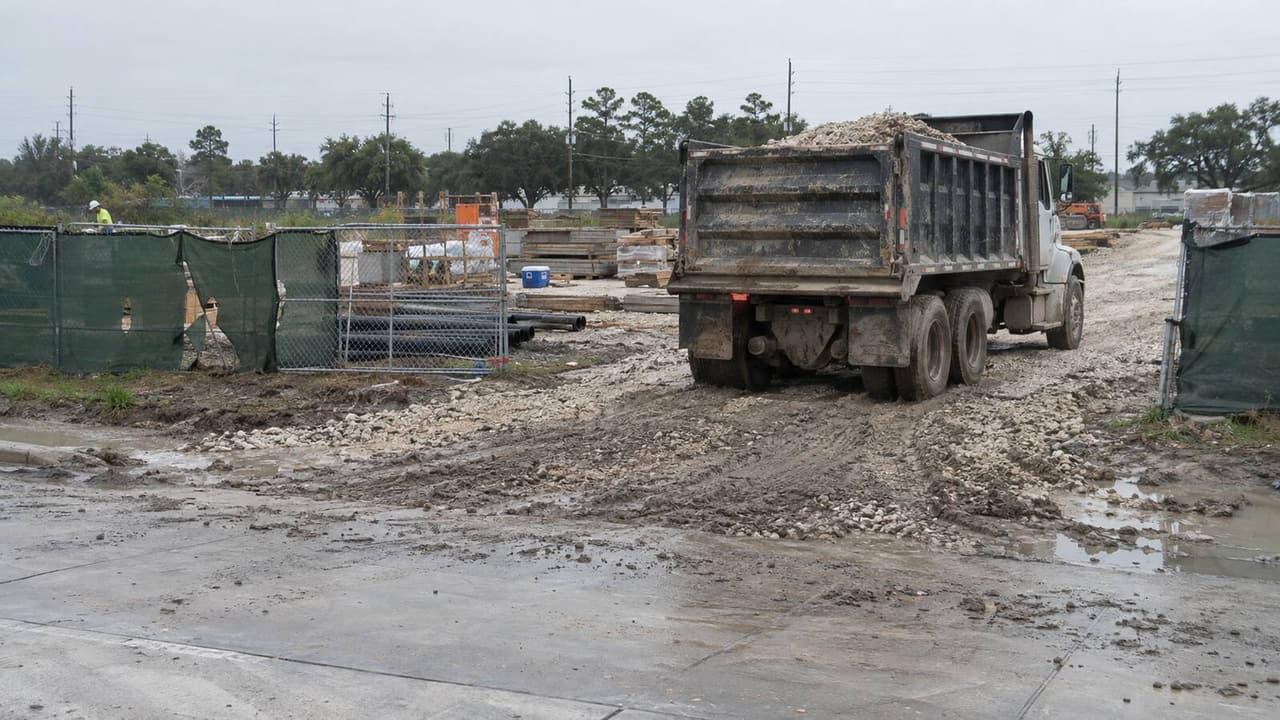
Rock dumped on bare Houston clay turns to ruts after the first hard rain. The clay pumps up, the stone sinks, and the low spots hold water. A gravel driveway that lasts is a small road: fabric, a compacted base, surface rock, a crown and a ditch. As a self-performing gravel driveway contractor, we run every gravel driveway installation with our own operators and one superintendent.
We build driveways to homes, shops and barns on acreage, plus ranch roads, RV and barndominium pads, and rebuilds. We help you choose crushed concrete, limestone or flex base. We also handle the driveway culvert, or prep the ditch where the county crew sets the pipe. We cut the grading, and clear the route where trees stand in the way.
Water is what wears a gravel driveway out. A normal Houston year brings about 52 inches of rain, and the Beaumont clay below lets it soak away slowly. So we crown the top about half an inch per foot, slope the sides, and cut a ditch to the culvert. Want to pave later? The same base can carry a concrete driveway.
Coverage
From the county road to the barn door, our own operators build it.
A full road section from the county road to your house or barn, built for heavy trucks.
Long private roads, crowned and ditched to stay passable after a week of rain.
Road fabric on soft clay, then a thick lift of crushed rock, so the clay stays down.
Crushed concrete for value, limestone for a cleaner finish, flex base for heavy loads.
Parking and turnaround pads beside your building, graded to drain away from the doors.
Ruts and potholes cut out, remixed and re-crowned, with new rock only where thin.
Our Process
Five steps take a muddy path to a crowned, drained driveway. Step one is a free site walk: call (832) 576-3278.
We walk the route and see where water runs today. Then we help line up the county culvert permit and call 811 before anyone digs.
Grass, roots and soft topsoil come off. The clay is crowned and compacted, and soft spots are dug out and replaced.
Where the county allows a contractor, we set the culvert to the size it gives us. Where its crew sets the pipe, we prep the ditch. Then we cut side ditches to move water off.
Fabric goes over soft clay. We push base rock onto it in thick lifts, then wet and roll each one. No tire touches bare fabric.
A finer top course is spread and crowned about half an inch per foot. We walk it with you after its first hard rain.
Timeline
Rough ranges for planning. Rain and soft ground move them.
| Project Type | Typical Size | Duration |
|---|---|---|
| Shop or RV gravel pad | Up to 2,500 sq ft | 1 - 2 Days |
| Standard acreage driveway | Up to 300 ft | 2 - 4 Days |
| Long driveway with culvert | 300 - 1,000 ft | 1 - 2 Weeks |
| Ranch or pasture road | 1,000+ ft | 2 - 4 Weeks |
| Rut and pothole regrade | Existing driveway | 1 - 2 Days |
Engineering & Compliance
A gravel driveway fails from the bottom up. We build the bottom first.
Why Jimenes
Rock on bare clay ruts and sinks in one wet season. We strip topsoil, compact the clay, fabric the soft spots, then build the base in thick lifts.
Flat driveways hold water and pothole. We crown the top about half an inch per foot and cut side ditches, so rain sheds off.
A material yard drops rock and drives away. Our operators clear, grade, ready the culvert crossing and spread the rock, under one superintendent.
Fabric, base rock, surface rock, culvert, clearing and haul-off each get a line. Change orders are signed before work starts.
Credentials
No Texas license exists for driveway builders. Ask for proof of insurance instead. Ours goes out with every estimate.
Where We Work
Based in Houston, we build gravel driveways on acreage from Cypress out past the Grand Parkway. Searching for a gravel driveway contractor near me? These are the towns and county roads we cover.
Good Questions
Still weighing rock, depth or the culvert at the road? The superintendent who would build your drive can answer by phone.
Talk to a BuilderPick crushed, angular rock with fines. Sharp edges lock together, and fines pack the gaps.
There is no flat rate. Cost moves with length and width, how soft the clay is, and rock type and depth.
No. Two inches of rock on bare clay sinks into the mud after the first wet spell. You need a thick base course plus a finer surface course, deeper on soft clay and for heavy trucks. Skipping the sub-base only works on firm, well-drained ground, which Houston clay rarely is.
Ruts come from no crown, no ditch, and rock mixed into the clay. Water sits and the rock pumps under every tire. A shovel of rock in the hole does not last.
It needs an occasional regrade, can be dusty, and is hard on strollers and bikes. Rock also drifts to the edges. On the plus side, it costs less than concrete, drains, and repairs one section at a time. You can also pave the same base as a concrete driveway later.
Outside city limits, the rock on your land often needs no permit. Crossing the county ditch does. In unincorporated Harris County, a driveway culvert needs a county permit and at least an 18-inch reinforced concrete pipe. Montgomery County rules vary by precinct, and the county or a precinct inspector sets pipe size. Our culverts page covers the crossing in full.
Keep Reading
Culverts, grading and clearing often come with a new driveway.
Driveway culverts and ditch crossings sized and set to Harris and Montgomery County rules.
Learn MoreFabric. Base. Crown.
A free site walk, a line-item price, and our own crew from the first cut to the last pass.



 Permitted & Inspected City of Houston and Harris County
 General Liability $2M per occurrence
 Workers’ Comp Full crew coverage
 Warranty 1-yr workmanship


 OR CALL (832) 576-3278