


 Plan in place before mobilization
SWPPP Plan & Site Map
A site-specific plan and map built from your civil sheets: drainage before and after grading, controls, truck exits, washout areas and discharge points.
Commercial Stormwater Compliance
Storm water pollution prevention plans for Houston construction sites. We set up the plan, run the inspections and keep the records ready for TCEQ and City inspectors.
Service Overview
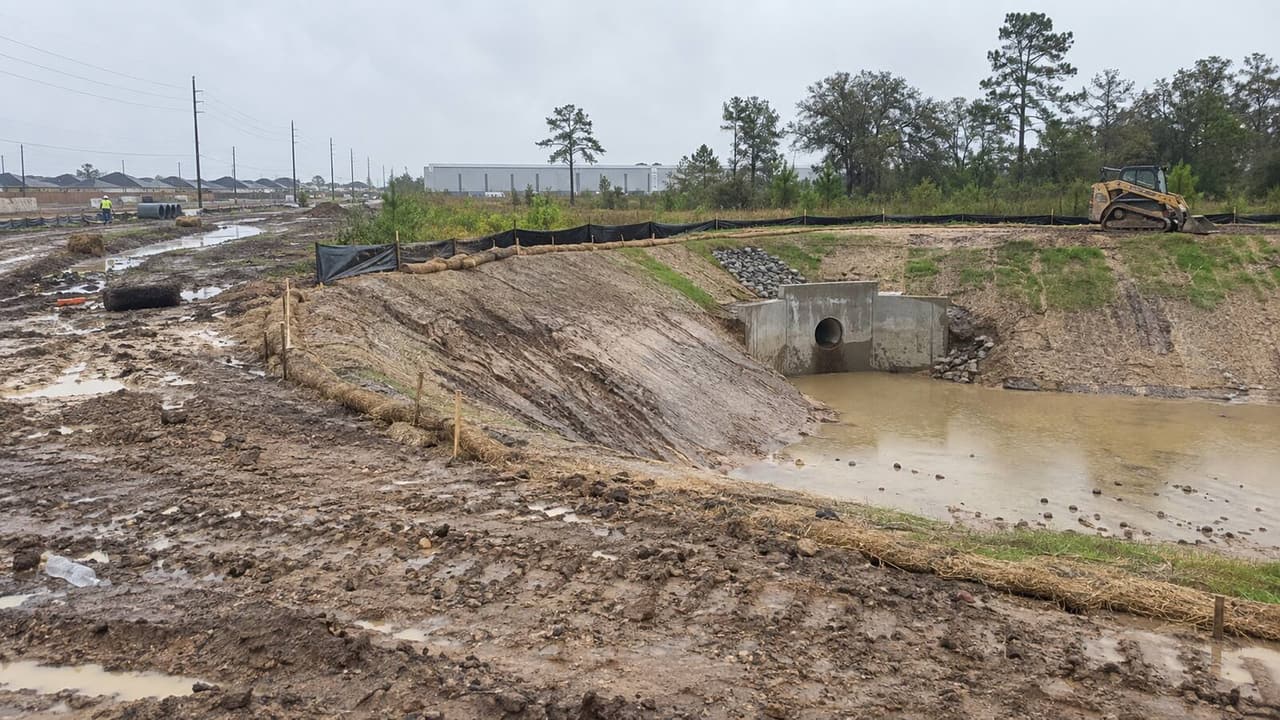
Disturb one acre of Houston ground and the state wants a written plan before the first blade drops. A construction SWPPP, short for storm water pollution prevention plan, is that document. It is the plan, the posted site notice, the inspections and the records that keep a job covered under TCEQ's construction permit. A missed inspection or a muddy street can bring a City violation notice. Jimenes Construction sets up your SWPPP in Houston, TX and keeps it current with our own superintendent and crews.
TCEQ's permit calls the plan an SWP3. It starts with what you are building, the pollutants on site, the work schedule and how many acres get disturbed. A site map shows how water drains before and after grading, where every control sits, where trucks leave and every point where water leaves the ground. On a small site of 1 to under 5 acres, you need the plan, a posted site notice and a copy to the City. At 5 acres or more, the operator also files a Notice of Intent through TCEQ's STEERS system. The plan lists the erosion controls and when each one goes in. It lines up with the site preparation that follows.
The permit names two operators. The primary operator runs the site day to day, usually the general contractor. The secondary operator is often the owner, who hires the builder and approves plan changes. Inspections run on the schedule the plan picks: every 14 days plus within 24 hours of a half-inch rain, or every 7 days no matter the weather. Each report is written within 24 hours. Findings go back into the plan within 7 days. Records stay on file for 3 years after closeout. When 10 or more disturbed acres drain to one spot, the plan usually calls for a sediment basin. Our grading crew can shape it while the dirt work is open. The crew that finds a problem is the crew that fixes it.
Coverage
Six parts of staying covered, from the first filing to the last one.
A site-specific plan and map built from your civil sheets: drainage before and after grading, controls, truck exits, washout areas and discharge points.
The NOI prepared for the operator's STEERS filing on 5-acre jobs, site notices posted, and copies sent to the City or county two days ahead.
Every 7 days, or every 14 days plus within 24 hours of a half-inch rain, with a written report inside 24 hours.
Erosion controls the plan calls for get fixed by our own crew, before the next rain when possible, and written into the plan within 7 days.
The plan, reports, notices and filings kept on site or on a tablet, with the SWPPP box and site notice ready when an inspector asks.
Cover at 70 percent of native growth, controls pulled, and the NOT or site notice removal filed within 30 days so the permit closes clean.
Our Process
Five steps carry a permit from the civil sheets to the closeout filing. Step one starts with a call to (832) 576-3278.
We read the civil and erosion control sheets, count disturbed acres, and confirm whether the job is a small site or needs an NOI.
The SWPPP and site map are written, and the operator signs. The NOI goes in through STEERS if needed, and the City or county gets its copy two days before work.
Site notices go up at the gate, and the plan's erosion controls go in before clearing starts.
Inspections run on the plan's schedule, reports are signed within 24 hours, and fixes and plan updates follow within 7 days.
Areas idle over 14 days get stabilization started by the next work day, final cover is confirmed, and the NOT or notice removal is filed within 30 days.
Timeline
Real ranges for getting a Houston site covered, from bid set to the closeout filing.
| Item | Scope | Timing |
|---|---|---|
| Small site plan and notice | 1 to under 5 acres | 3 - 5 Days |
| Large site plan and NOI | 5+ acres | 1 - 2 Weeks |
| Notice to City or county | before earth disturbance | 2 Days Ahead |
| Inspection reports | each inspection | Within 24 Hours |
| Closeout filing | after final stabilization | Within 30 Days |
Engineering & Compliance
Houston averages about 52 inches of rain a year. The plan has to hold up in every one of those storms.
Why Jimenes
Paperwork firms write down that a silt fence is down and leave it for someone else. Our crew is already on the job. We repair it, usually before the next rain, and the report shows the date.
A half-inch storm overnight triggers an inspection that is easy to forget. Our superintendent tracks rain daily. We can also set the plan to the 7-day schedule, so rain never changes the calendar.
Plans get written once and never touched, with maps showing controls that are long gone. We update the site map and plan within 7 days of every change, ready for an unannounced City visit.
The plan, the filings, each inspection, corrective work and closeout all get their own line. Extra inspections or repairs outside the plan get a written price you approve first.
Credentials
Texas sets no license for this work, so ask any SWPPP contractor for proof of coverage. Ours ships with the proposal and matches the four tiles below.
Where We Work
Based in Houston and keeping commercial and industrial sites in compliance across Harris, Fort Bend and Montgomery counties. If you searched for SWPPP companies near me, these are the cities we cover.
Good Questions
Still have questions about staying covered? Call and talk to the superintendent who will run your plan and inspections.
Talk to a BuilderYes, once a job disturbs one acre or more, or is part of a larger common plan, and drains to state waters. From 1 to under 5 acres, you need the SWPPP, a posted site notice and a copy to the City or county. At 5 acres or more, the operator also files a Notice of Intent through TCEQ's STEERS system. Under one acre in Houston, there is no state plan, but the City still expects controls on every site. See our erosion control page for the physical controls the plan requires.
The permit names two operators. The primary operator has day-to-day control of the site or control over the plans, usually the general contractor. The secondary operator is often the owner. The primary operator files the NOI, and the secondary posts its own notice. If there is no primary operator, the secondary becomes the primary. When the GC changes mid-job, the new contractor files its own NOI at least 10 days before taking over. In Texas these filings go through TCEQ's STEERS system. EPA's eNOI only covers tribal land here. Our site preparation crew mobilizes once the notices are in place.
The plan picks one schedule. Inspect every 14 days plus within 24 hours of a half-inch rain, or inspect every 7 days no matter the weather. Several small showers that add up to half an inch in a day count as one storm. Stabilized areas are checked at least monthly. The schedule can change once per calendar month, with the reason written down. Each report is written within 24 hours, and fixes go in before the next rain when possible.
Texas does not require a certified inspector or an engineer's stamp on the plan. TCEQ asks for inspectors who know the permit, the site and the plan. Their names and qualifications are listed in the SWPPP, and each report is signed under TCEQ's rules. Records stay on file for at least 3 years after the Notice of Termination or site notice removal. Some inspectors hold voluntary credentials like CESSWI or CPESC, though the state does not require them.
Inside the city, stormwater inspectors drop by unannounced. They look for the TCEQ site notice at the gate and ask for the SWPPP. The City wants a copy of the NOI or notice at least two days before earth disturbance. A first visit that finds a problem brings a Notice of Violation, and citations follow if it is ignored. TCEQ fines can reach $25,000 a day for each violation. Repeat, avoidable violations that release harmful pollution can reach $40,000 a day. The City's storm water quality permit is a separate, permanent permit for the finished site's water features, handled by the design engineer. Those features can tie into our detention and retention pond work.
Price depends on the job. The drivers are acres, small versus large site, the number of phases and operators, the inspection schedule and the project length. Sediment basin needs and the amount of corrective work also move the price. The NOI filing fee is TCEQ's own charge, listed at $225 for an online filing at last check. Coverage ends at final stabilization, with 70 percent of native cover grown back, and the Notice of Termination or notice removal is filed within 30 days. Ask for a free line-item estimate and we will price every part on its own line.
Keep Reading
A SWPPP rides along with the dirt work. Our crews also build the controls and earthwork the plan depends on.
Silt fence, rock entrances, inlet protection and seeding that your SWPPP calls for.
Learn MoreClearing, stripping and proof-rolling that starts once your plan and notices are in place.
Learn MorePonds built early that can be designed to double as the sediment basin on large sites.
Learn MorePlanned. Posted. Inspected.
Free estimates, line-item pricing, and one superintendent who keeps the plan, the inspections and the fixes on schedule.



 Permitted & Inspected City of Houston and Harris County
 Workers’ Comp Full crew coverage



 OR CALL (832) 576-3278