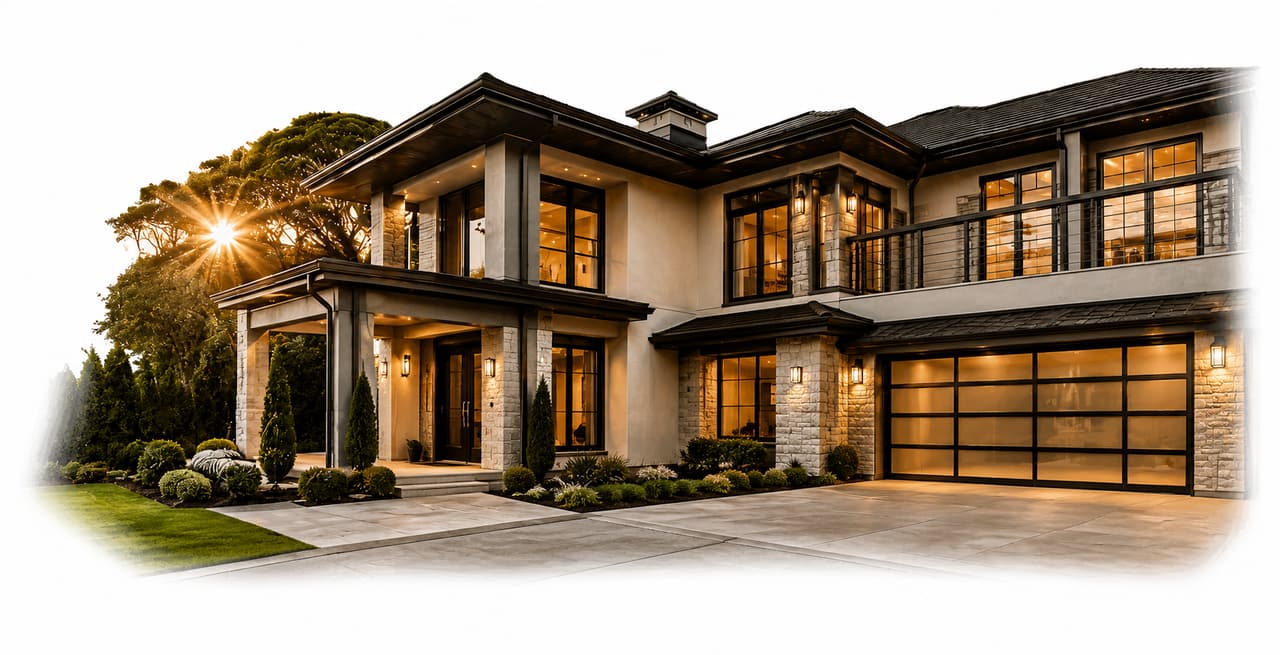


 Self-performed crews on every shaft
Straight-Shaft Drilled Piers
Uniform-diameter shafts carried below the active zone, sized on skin friction and end bearing. The everyday answer where the geotech log calls for depth over a bell.
Commercial & Residential Concrete
Straight-shaft and belled piers drilled below the Houston active zone, cased or poured under slurry in wet sand, set and poured by our own crews. Truck and limited-access rigs.
Service Overview
Foundations in Houston sit on expansive clay. The top 8 to 20 feet is what engineers call the active zone. It swells in a wet spell and shrinks in a drought. That movement carries enough force to heave a slab, a porch or a light pole.
Drilled piers reach past that layer to firm soil that holds steady all year, which is why they are the right foundation on Houston ground. Jimenes Construction is a self-performing foundation drilling contractor in Houston, TX, with 23 years of drilling and pouring piers engineered for our clay, all with our own crews.
Drill a pier that stops short of that layer and the ground keeps shoving your structure up a little more each year. Doors stick, posts tilt, and cracks open at the beam.
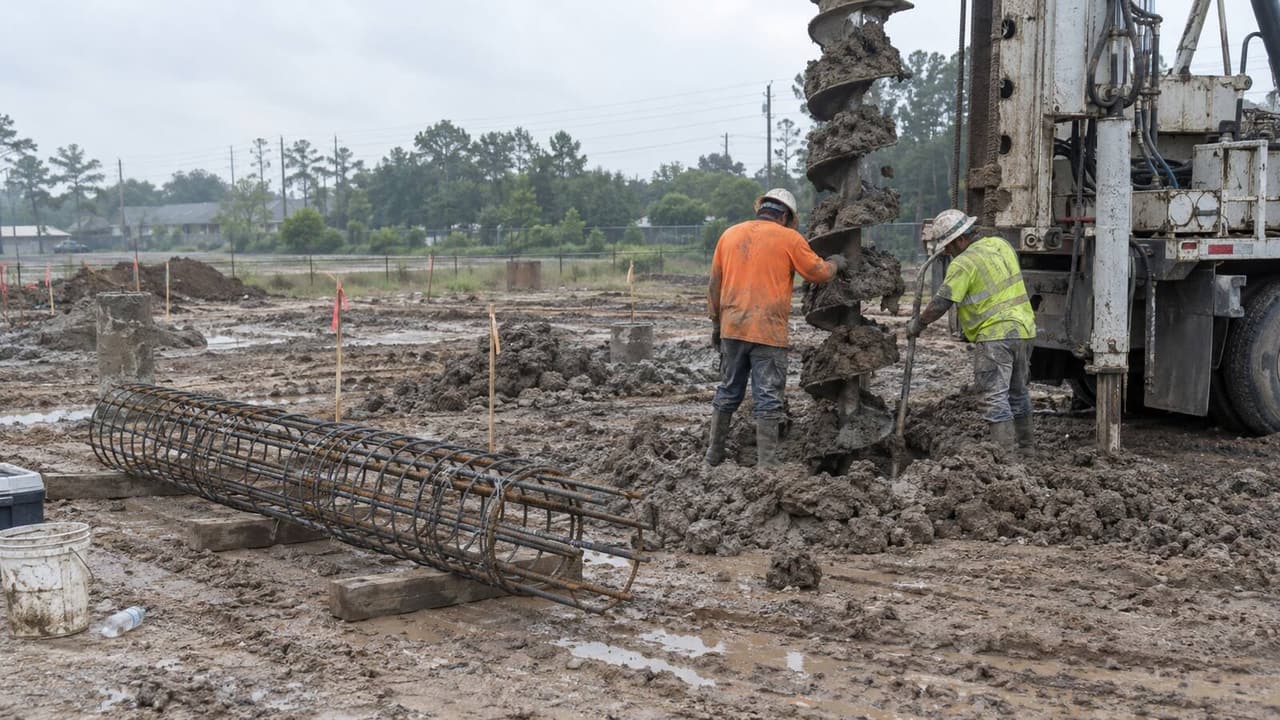
Drilled piers fix that by carrying the load down to soil that does not move with the weather. Our own crew runs the rig, sets the steel cage and pours the shaft. There is no drilling sub and no hand-off. We drill straight-shaft and belled piers for pier and beam foundations, for the concrete foundations we pour, and for decks, light poles and sign bases. In 23 years across Greater Houston we have set piers below the active zone on more than 640 foundations.
The soil report sets the depth on every shaft. We read the geotech log and the active zone before we quote, then match the rig to the lot. Where wet sand caves the hole, we case it or drill under bentonite slurry so the shaft holds its shape. If your foundation has already moved, our foundation repair page is the right place to start.
Coverage
Each of these is its own drilling problem. We crew, drill and pour all six in house.
Uniform-diameter shafts carried below the active zone, sized on skin friction and end bearing. The everyday answer where the geotech log calls for depth over a bell.
An underream at the tip spreads the load onto firmer clay, so the pier carries more without going deeper. Common on pier and beam homes and heavier point loads.
Drilled piers and grade beams that lift a house off the clay with a crawl space below. Often the required answer on Harris County 100-year floodplain lots, where fill is banned.
Deep piers that carry a suspended structural slab on 4 to 8 inch carton void forms, so the highest-PI lots move under the house instead of with it.
Cased shafts with anchor-bolt cages set to the pole or sign drawings, for parking lots, retail pads and Grand Parkway industrial sites.
Smaller-diameter piers for decks, porches, canopies and equipment supports, drilled with a limited-access rig where a truck cannot reach.
Our Process
Five steps, the same on four deck piers and on a fifty-pier commercial package. Call (832) 576-3278 to start at step one.
We walk the lot and check rig access. We read the geotech log for active zone depth and any wet-sand layers. Then we price the piers.
A line-item quote tied to the sealed plan: pier count, shaft diameter, tip depth, bell size, steel cage, and casing or slurry where the hole will cave.
We call 811 for utility locates, stake every pier, then bring in the truck rig or the limited-access rig the lot can actually fit.
We drill each shaft to depth. In wet sand we case the hole or drill under slurry. We cut the bell where called for, verify the open hole, then drop the rebar cage.
Concrete placed clean or tremied under slurry, tops set to grade with anchor bolts as needed, then inspection and engineer letters filed at closeout.
Timeline
Real ranges from our own job records, from mobilization to engineer sign-off.
| Project Type | Typical Count | Duration |
|---|---|---|
| Deck, porch or equipment piers | 4 - 12 piers | 1 - 2 Days |
| Light pole & sign bases | 1 - 20 piers | 1 - 3 Days |
| Pier & beam house piers | 20 - 45 piers | 3 - 6 Days |
| Structural slab on drilled piers | 30 - 90 piers | 1 - 2 Weeks |
| Commercial pier package | 50+ piers | 2 - 4 Weeks |
Engineering & Compliance
Houston clay moves with the weather, and the sand below it caves. We drill for both, and the geotech log tells us how.
Why Jimenes
Piers fail at the hand-offs: a drilling sub, a steel sub, a pour crew. Our own crew drills the shaft, sets the cage and pours it, so nothing is lost between trades.
Most pier trouble here starts with a tip that stopped short of the active zone. We read the geotech log and active zone before we quote, then drill to the depth the engineer called for.
Shaft depth, the bell and the steel cage get checked before any concrete drops. A shallow tip or a loose cage gets corrected while the hole is still open.
Pier count, diameter, depth, bells, steel and casing or slurry each get their own line. You see what the drilling costs, and change orders are signed before the work.
Credentials
Texas does not license concrete contractors, so we send the insurance certificate and the engineer's letters with every proposal. Here is what a foundation drilling contractor in Houston can actually show you.
Where We Work
Headquartered in Houston and drilling piers across the Greater Houston area, from inside the 610 Loop out past the 180-mile Grand Parkway. If you searched for a foundation drilling contractor near me and landed here, this is the radius we cover. We can be on site the same week.
Good Questions
Still not sure? Call and talk to the person who will run your drill rig.
Talk to a BuilderDeep enough to get the tip below the active zone, which is the layer of clay that swells and shrinks with the weather. Houston engineers put that zone at about 8 to 20 feet, and the soil report sets the exact number for your lot. A pier that stops inside the active zone gets lifted and dropped every season. The geotech log tells us how far to drill and whether skin friction or end bearing carries the load. Send us the soil report and we will price the piers to it. See our pier and beam page for how those piers carry a house.
Both carry the load down to firmer soil. They just do it differently.
There is no flat rate, because two lots with the same house can price very differently. The pier cost moves with count, shaft diameter, tip depth, whether the tip is belled, the steel cage, and whether wet sand forces casing or slurry drilling. Rig access matters too, since a tight backyard needs a limited-access rig. We do not publish a price per pier before the soil report, because that number would be a guess. Ask for the free written estimate instead. Every one of those items gets its own line. For the full foundation it feeds, see our concrete foundations page.
Yes. Not every job can fit a truck-mounted rig, so we run limited-access rigs for backyards, side yards and gated lots. That is how we drill deck piers, porch piers and additions where a big rig cannot reach. We walk the site first to check the gate width, overhead lines and the spoil path, then bring the rig that fits. Call (832) 576-3278 and describe the access and we will tell you what it takes.
Almost always yes to both. Piers on expansive Houston clay are a deep foundation, and the code sends the design to a Texas PE under IBC 1808 and 1810. A floodplain lot in Harris County needs a PE no matter what. The permit comes from the City of Houston inside city limits and from the Harris County Engineering Department outside them, and the neighboring counties each run their own office. We call 811 for utility locates before the rig turns, and we book the open-hole and steel inspections. Texas does not license concrete contractors, so ask for the insurance certificate and the engineer's letters instead.
It depends on what is under it now. If the structure was never set on piers, or the piers stopped short of the active zone, new drilled piers below that zone are the lasting fix. If a built foundation has already dropped or heaved, that is repair work on what is already under it. Start on our foundation repair page for leveling and underpinning, or our pier and beam page if you are rebuilding the support. Call (832) 576-3278 and we will look at it and tell you straight.
Keep Reading
Piers rarely travel alone. These are the concrete services that most often run with them.
Drilled piers and grade beams that lift a house off the clay, for floodplain lots and high-PI ground.
Learn MoreSlabs, piers and grade beams engineered for Houston clay, formed and poured by our own crews.
Learn MoreTendon-reinforced foundations for commercial pads and large homes on expansive Houston clay.
Learn MoreUnderpinning, leveling and pier repair for a Houston foundation that has already moved.
Learn MoreBuilt On Integrity. Drilled To Plan.
Free estimates, line-item pricing, and our own crews from the first shaft to the last pour.



 Permitted & Inspected City of Houston and Harris County
 General Liability $2M per occurrence
 Workers’ Comp Full crew coverage
 Warranty 10-yr structural, 1-yr workmanship



 OR CALL (832) 576-3278