


 Own operators and machines, never brokered
Residential Lot Clearing
Trees, brush and stumps taken off a home lot, with the trees you keep fenced and the debris hauled away.
Residential & Commercial Site Work
Land clearing services for home lots, acreage and commercial sites across Greater Houston. Trees, brush and stumps come out by our own crews, and the ground is left ready to grade.
Service Overview
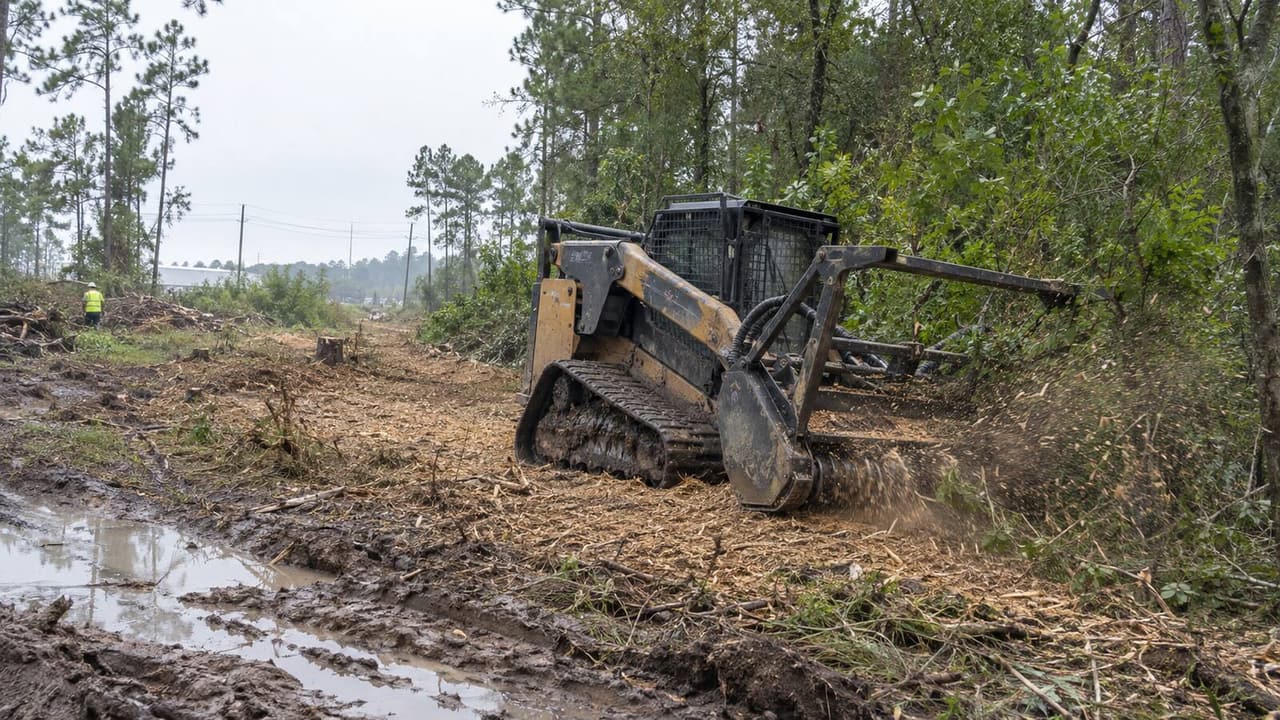
Raw land around Houston often comes wooded, overgrown or choked with Chinese tallow and yaupon. Before anything gets built, that growth has to come out, roots and all. Land clearing removes the trees, brush and stumps and leaves ground that is ready to grade. Jimenes Construction self-performs land clearing services with our own operators and machines, for homeowners and builders across Greater Houston.
Clearing takes down the trees and brush. Grubbing pulls the stumps and root mats. Stripping lifts off the organic topsoil. A house or building pad needs all three. A pasture, trail or fence line often needs only clearing, or forestry mulching that grinds the brush and leaves the mulch in place. Once the ground is open, grading and building pads are the usual next steps.
Houston rules shape the job before a machine moves. Cleared brush can be burned only when there is no practical alternative like grinding or hauling, and only where it was cut. Inside city limits, plan on grinding or hauling instead. Street trees and big setback trees can need a City permit posted 20 days ahead. Low, wet ground may need a check with the Corps of Engineers first. On a commercial tract of one acre or more, erosion controls go in before the first tree falls.
Coverage
Six kinds of clearing, from a single home lot to a commercial tract. Our own crews handle all six.
Trees, brush and stumps taken off a home lot, with the trees you keep fenced and the debris hauled away.
Pads, drives and barn sites cut into wooded acreage in Magnolia, Montgomery and Waller County, with the rest of the tract left standing.
Clearing to the limits on the civil plan for pads, parking and detention, with erosion controls set before we start.
Stumps and root mats pulled, the holes backfilled, and organic topsoil stripped so the pad does not settle later.
Thickets of Chinese tallow and yaupon pulled out root and all, which cuts down on the sprouts that come back.
Keeper trees flagged, root zones fenced, and City right-of-way permits handled before any machine moves.
Our Process
Five steps, whether it is a half-acre lot in Spring or a commercial tract off the Grand Parkway. Call (832) 576-3278 and we will set a date for the site walk.
We walk the tract, flag the trees you want to keep, and check for right-of-way trees, low wet ground and truck access.
Clearing, grubbing, stripping and disposal are priced as separate lines, with the disposal method chosen up front.
Tree and county permits where required, root zones fenced, silt fence set, and 811 called before we grub.
Trees felled and stacked, stumps and root mats pulled, holes backfilled and compacted, and organic topsoil stripped and stockpiled.
Debris hauled off or ground, then the tract walked with you and handed off ready for grading.
Timeline
Planning ranges from mobilization to the final walk. Weather and disposal move them the most.
| Project Type | Typical Size | Duration |
|---|---|---|
| Residential lot clear and haul-off | Up to 1 acre | 2 - 4 Days |
| Homesite pad and driveway on acreage | 1 - 3 acres | 1 - 2 Weeks |
| Underbrush, tallow and yaupon removal | 2 - 10 acres | 1 - 2 Weeks |
| Full clear, grub and strip for a commercial pad | 5 - 20 acres | 2 - 5 Weeks |
| Subdivision section or large tract | 20+ acres | 4 - 10 Weeks |
Methods & Compliance
Clearing looks simple until a protected tree, a wet swale or a burn ban shows up. We check for all three before we price the job.
Why Jimenes
Stumps and roots left under a pad rot and leave soft spots that settle. We grub the full root mass under pad and drive areas, then backfill and compact the holes before grading.
Knock a Chinese tallow down and its roots send up a thicket of sprouts. We pull the root mass, and we can line up a licensed applicator for cut-stump treatment where you want a tree cut flush.
Burn rules, city limits and burn bans can strand a pile of brush for weeks. We set the disposal method at the estimate, most often haul-off or grinding, and price it on its own line.
Lump-sum clearing bids hide what disposal and grubbing cost. Clearing, grubbing, stripping, disposal and tree protection each get a line. Extra clearing waits for a signed change order.
Credentials
No state license covers land clearing in Texas. Ask every bidder for a certificate of insurance; ours rides along with each proposal.
Where We Work
Headquartered in Houston and clearing land across Greater Houston, from city lots inside the Beltway to wooded acreage along the Grand Parkway. Much of our clearing runs north into Montgomery County and west into Waller and Fort Bend, where new homes and new commercial sites keep going up. Searching for land clearing near me from any of these towns? We work there.
Good Questions
Questions about your tract? Call, and the superintendent who would clear it picks up.
Talk to a BuilderThere is no flat rate. The land clearing cost on your tract turns on acreage, tree density and tree size. It also depends on full grubbing and stripping versus clearing only, and on the disposal method. Haul-off, grinding and on-site burning all price differently. Tree protection, truck access, wet ground and permits move it too. The cheapest route is usually grinding brush in place when nothing will be built there. A building site needs full grubbing, which costs more. Our free written estimate breaks each of those out as a separate price. If nothing is going up on the land, see forestry mulching.
It depends on where the land is and what the clearing turns into. Inside Houston, trees in the right-of-way or the setback need a City permit, posted on site 20 days ahead. In unincorporated Harris County, clearing that becomes grading, fill or a new pad needs a County development permit. In unincorporated Montgomery County, clearing is listed on the non-structure permit, and disturbing more than 15,000 square feet brings a County drainage sign-off. Once clearing and grading disturb an acre or more, the state storm water permit asks for a written plan and a sign at the site. So clearing your own land can still take a permit. See SWPPP for the storm water side.
Around Houston, cleared brush can be burned only when there is no practical alternative like grinding or hauling. The burn must also happen at the site where it was cut. It cannot be trucked to another tract to burn. Legal burns need daylight hours, the right wind and 300 feet from a neighbor's home. Inside city limits, plan on grinding or hauling. County burn bans can stop open burning on short notice. Large tracts sometimes use a TCEQ-authorized air-curtain burner. At the estimate, we check which methods your tract allows and price the one you pick.
Clearing takes down the trees and brush. Grubbing pulls the stumps and roots out of the ground. Stripping removes the organic topsoil on top. Forestry mulching is different: it grinds brush and small trees in place and leaves the roots in the ground. Mulching is fine for pasture, trails and fence lines. It is the wrong tool under a pad, because buried wood and stumps rot and settle. A building site needs the full grub and strip. Read more on our building pads page.
Sometimes, but the low ground gets checked first. Under federal rules, mowing or cutting trees above the ground is not a fill discharge, as long as the roots are left alone. Pushing trees over, root-raking or grubbing with a dozer in a wetland can be. Houston sits in the USACE Galveston District. A wetland consultant can request a jurisdictional determination there before machines go in. We will not grub ground that might be a wetland until that is settled. Tracked machines on wet clay also wait for it to dry.
You pick the keepers at the site walk, and we flag them. We fence at least 75 percent of the root zone out to the dripline, or cover it with wood chips and road boards. Most roots live in the top two feet of soil, so we keep machines and stockpiles off them. In Houston, a healthy tree you keep can count toward the trees the City requires on new construction. Street trees and big setback trees can be protected and need a permit to remove. Tallow and dead or leaning trees are usually the ones to take.
Keep Reading
Clearing is the first step on most sites. These services usually follow it.
Clearing, stripping, grading and pad prep run as one job for a new home or commercial site.
Learn MoreA mulcher grinds brush and small trees where they stand, for pasture, trails and fence rows that will never carry a building.
Learn MoreCleared Right. Ready To Build.
A free walk of your tract, a price broken out by task, and the same operators from the first felled pine to the last load of stumps.



 Permitted & Inspected City of Houston and Harris County
 Workers’ Comp Full crew coverage
 Warranty 1-yr workmanship



 OR CALL (832) 576-3278