


 Trained competent person on every trench
Steel & Aluminum Trench Boxes
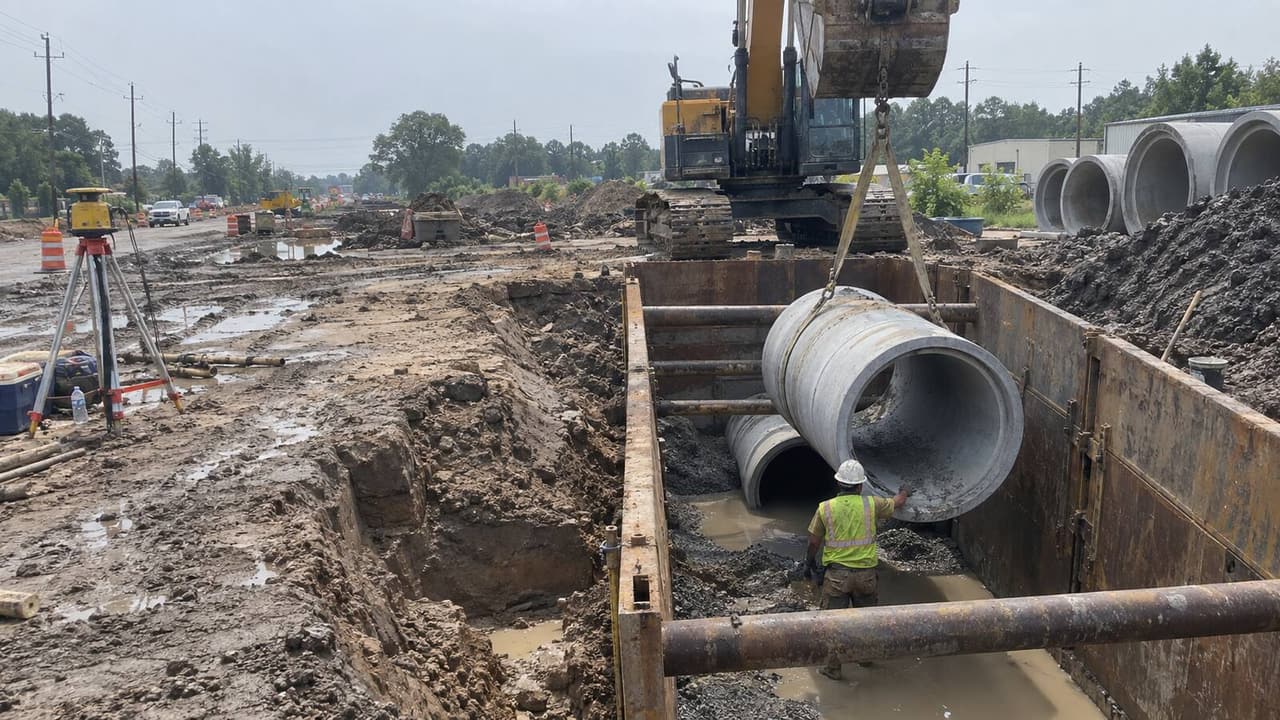
Steel boxes for deep, heavy runs and aluminum for tight sites. The box is dragged along the line as pipe is laid and backfilled.
Commercial Site Work
Trench boxes, slide rail and hydraulic shoring for utility and structure excavations across Greater Houston. Our crews set it, inspect it daily and pull it as the backfill goes in.
Service Overview
Houston trench walls are cracked clay, old utility backfill and wet sand seams. They can let go without warning. Trench shoring is the box, rail or hydraulic system that holds a crew safe while pipe goes in. Jimenes Construction sets and runs it with our own crews as part of the dig.
We are the trench shoring contractor that also digs the trench and lays the pipe, so protection moves with production. Our crews run steel and aluminum trench boxes, manhole boxes, slide rail and aluminum hydraulic shores, plus sloping where the site has room. The pick is driven by depth, soil type, water, utility crossings and room to work. This service runs with our underground utility installation, storm sewer and excavation crews.
Houston ground rules out the easy calls. Fissured clay, road traffic and old utility corridors often put trench walls here in Type B or C. Hit a wet sand seam and the wall is Type C, whatever the clay above it looks like. Type C gives no benching option in OSHA's tables, so you slope it back or you shore it.
Every box, shore and rail follows the maker's tabulated data or a licensed engineer's design. Past 20 feet, OSHA requires an engineer's design or engineer-approved tabulated data. On City of Houston work we submit the Section 02260 trench safety program and keep the daily log. Send us the plan and profile for a line-item price.
Coverage
Six ways to protect a trench. The soil, depth and water decide which one fits.
Steel boxes for deep, heavy runs and aluminum for tight sites. The box is dragged along the line as pipe is laid and backfilled.
Four-sided and manhole shields for manholes, inlets, vaults and tie-ins, where a pipe run meets a structure.
Rails and steel panels pushed down in stages as we dig, for deep manholes, lift stations and pits with utilities crossing through.
Hydraulic shores pumped tight against the walls from above, for shallower runs, service lines and spots a box cannot reach.
Walls cut back to OSHA slopes where the site has room. In wet Type C ground that means 1.5 to 1, with no benches.
Pumps, sumps and diversion berms that keep rain and seepage from softening the walls, watched by our competent person.
Our Process
Our five steps run from the bid documents to the last backfill lift. Call (832) 576-3278 with your plan and profile in hand.
We read the plan and profile, the soil borings and any trench safety geotech document. Every run 5 feet or deeper gets marked for a protective system.
We match a box, rail, shores or slope to each reach and gather the maker's tabulated data. A licensed engineer is brought in where the design calls for one.
We call 811 and coordinate any dig within 15 feet of a pipeline. Spoil stays 2 feet back, ladders go in, and surface water is diverted before the first bucket.
Protection goes in as we dig. The box moves with the pipe crew, lifted as each backfill lift is compacted against native soil.
Our competent person inspects each morning and after rain, then logs it. The system comes out from the bottom up as backfill goes in.
Timeline
Shoring runs with the excavation. These ranges cover the setup and production time for each system.
| Project Type | Typical Depth | Setup / Duration |
|---|---|---|
| Service line or short storm run with hydraulic shores | 5 - 8 ft | Same day setup |
| Sanitary or storm main with trench box | 8 - 14 ft | 1 - 2 Days setup, moves with the pipe |
| Manhole or inlet structure with manhole box | 8 - 16 ft | 1 - 3 Days per structure |
| Lift station or deep pit with slide rail | 16 - 25 ft | 1 - 2 Weeks install |
| Engineered special shoring over 20 ft | 20 ft + | 2 - 4 Weeks design lead |
Engineering & Compliance
A trench wall that stood yesterday can fail after one night of rain. The rules below are how we keep it standing.
Why Jimenes
When a rental yard drops a box and a different sub digs, nobody owns the protection. Our operators and pipe crew set, move and pull it under one superintendent.
OSHA and the City both want a daily inspection by someone with the authority to stop work. Our trained competent person inspects each morning and after rain, logs it, and pulls the crew at the first sign of movement.
Submittals bounce when the tab data, soil type and sealed drawings do not match the plan. We hand in the safety program, tabulated data and any PE designs together.
Shoring buried inside the excavation price hides the cost, and on public jobs it breaks the bid rules. We price it by the linear foot, with special shoring separate, the way HSC 756 and the City bid form expect.
Credentials
Texas issues no license for trench protection work, so owners and engineers check our insurance, our written trench safety program and the daily logs from past jobs instead. These four items back every trench we protect.
Where We Work
Our crews shore utility trenches from the Ship Channel plants to new subdivisions past the Grand Parkway. Looking for a trench shoring company near me? These are the towns we work in most.
Good Questions
Got a deep run on your next bid? Call and ask the superintendent who would set and inspect the box.
Talk to a BuilderOSHA requires a protective system in any trench 5 feet or deeper. Shallower trenches need one too if the competent person sees signs of a cave-in. The 4-foot mark is the ladder trigger, not the shoring trigger. Past 20 feet, the system needs a licensed engineer's design or engineer-approved tabulated data. In Houston's wet clay we often protect shallower cuts, because seeping walls fail early. See our excavation page for how the dig and the protection are planned together.
The rules come from OSHA Subpart P. The main ones are simple to check.
Shoring and shielding solve the problem two different ways. Shoring, like hydraulic shores or slide rail, presses against the walls to keep them from moving. A trench box shields the crew inside and lets the wall move up to it. Boxes are fast on long pipe runs. Shoring suits crossings, manholes, pavement and work near existing structures, where ground movement matters. The City spec lists slide rail as special shoring. See our underground utility installation page.
Only the competent person can classify the soil, and it is checked each day. Houston clay is often rated Type B or C. Fissures, road traffic and old utility backfill rule out Type A. Water seeping from a wall makes it Type C. In Type C the OSHA slope is 1.5 to 1, and the tables give no benching option. Sloping needs a lot of room and disturbs more ground, so a box or shoring is usual on a tight site.
There is no flat rate. The price moves with depth, length, the system type, soil and water, utility crossings, engineer design and how long the equipment stays. On public jobs, trench safety is paid by the linear foot, and special shoring by the square foot. We do not publish a per-foot number, because it would be a guess before we see the plan. Send us the plan and profile for a free line-item estimate.
Texas Health and Safety Code Chapter 756 sets the rule on public jobs. On any trench deeper than 5 feet, the bid documents reference OSHA, include the owner's geotech info, and carry a separate trench safety pay item. City of Houston Section 02260 adds a written safety program, PE-sealed special designs, a daily inspection log and linear-foot payment. TxDOT Item 402 works the same way on state jobs. City review of the program does not shift the safety duty, which stays with the contractor in the trench. Our storm sewer bids carry the same line items.
Keep Reading
Trench protection sits inside a bigger dig. These crews open, fill and guard the trenches we shore.
Water, sewer and dry utility lines dug, laid, bedded and backfilled by the same crew.
Learn MoreMass and structural excavation with the protective system planned in from day one.
Learn MoreSilt fence, inlet protection and diversion that keep storm water out of open trenches.
Learn MoreInspected. Logged. Protected.
Free estimates from your plan and profile, trench safety priced as its own line, and our own crew setting every box and shore.



 Permitted & Inspected City of Houston and Harris County
 Warranty 1-yr workmanship



 OR CALL (832) 576-3278